Helium Detected Escaping Rocky Exoplanet Atmosphere
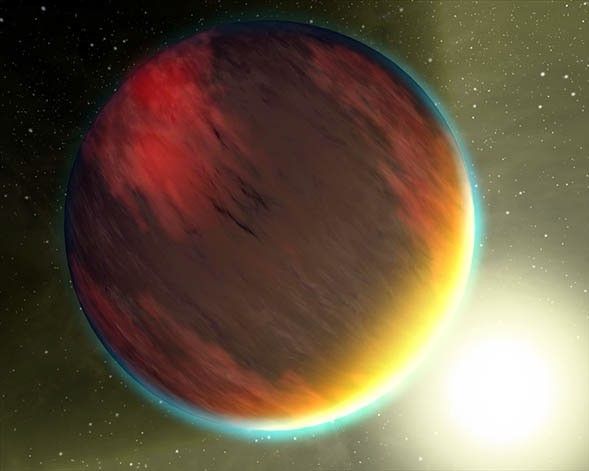
Astronomers have successfully detected helium escaping from the atmosphere of a large, rocky exoplanet. This groundbreaking observation allows scientists to infer the composition of the planet's atmosphere by analyzing what is left behind as helium dissipates. The detection of helium loss provides crucial insights into the atmospheric evolution and potential habitability of rocky planets outside our solar system. Understanding these processes is key to identifying planets that could potentially support life. This finding marks a significant step forward in the study of exoplanetary atmospheres and their dynamics. Further research will aim to confirm these observations and expand the search for similar phenomena on other exoplanets. The ability to detect and analyze escaping gases offers a new avenue for characterizing these distant worlds. This discovery contributes to the broader scientific endeavor of understanding planetary formation and diversity across the galaxy.
The detection of helium escaping a rocky exoplanet's atmosphere represents a significant advancement in exoplanet characterization. This observation provides empirical data for atmospheric escape models, which are crucial for understanding planetary evolution and the long-term stability of atmospheres. Analyzing the rate and composition of escaping gases can offer insights into the planet's internal processes, such as volcanic activity, and its interaction with stellar radiation. This method could become a vital tool in assessing the potential for habitability, as atmospheric retention is a key factor. Future research will likely focus on refining detection techniques and applying them to a wider range of exoplanets to build a more comprehensive understanding of atmospheric dynamics and diversity across different planetary types and stellar environments.
AI-generated to prompt reflection — not editorial opinion, not advice, not a statement of fact. How this works.