Helix Nebula's 'Eye' Captured in Stunning Detail
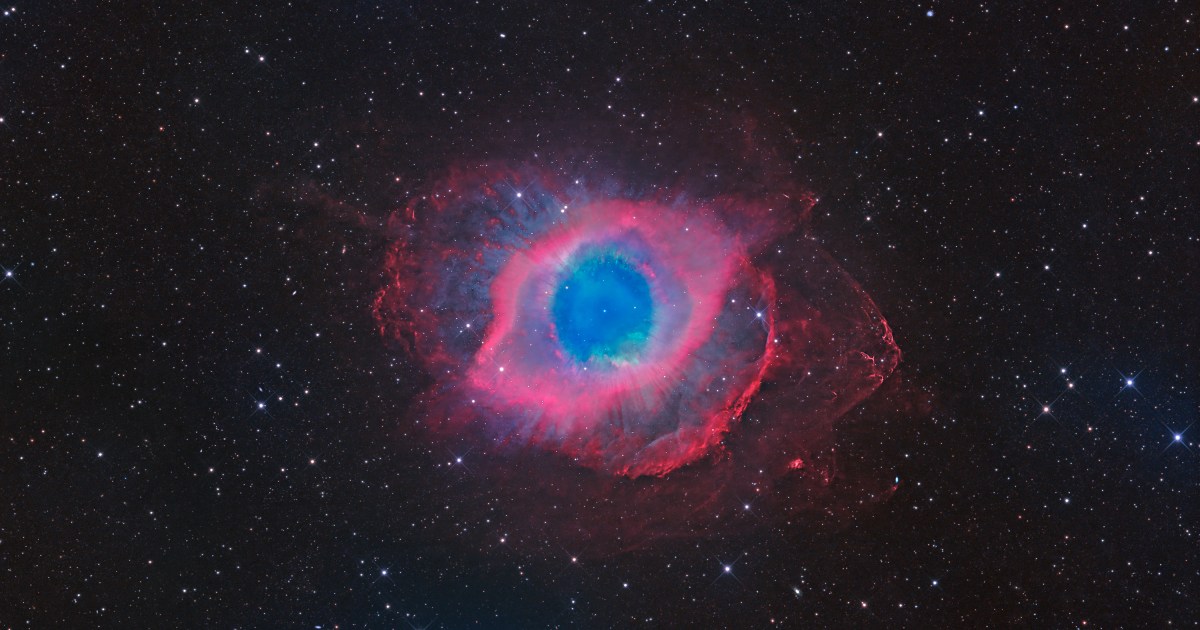
Astronomer Gerald Rhemann has captured a detailed image of the Helix Nebula, also known as NGC 7293. Located approximately 650 light-years away in the constellation Aquarius, the Helix Nebula is a planetary nebula formed from the expelled outer layers of a dying Sun-like star. At its center lies a hot white dwarf, the remnant core of the star. Rhemann utilized a combination of Hα, OIII, and LRGB filters for the imaging process. The total exposure time for this remarkable photograph amounted to about 24.3 hours, allowing for the intricate details of the nebula's structure to be revealed. The image showcases the glowing remains of the star's outer atmosphere, creating a striking visual resemblance to a giant eye.
This astronomical image offers a visual representation of stellar evolution and the eventual fate of Sun-like stars. The capture highlights the complex processes of planetary nebula formation, where stellar remnants create intricate structures visible across vast cosmic distances. From a systems perspective, the long exposure times and advanced filtering techniques demonstrate the increasing capabilities of astronomical observation, pushing the boundaries of our understanding of celestial phenomena. As technology advances, such detailed imaging will continue to refine our models of stellar lifecycles and the composition of the universe, contributing to humanity's ongoing quest for cosmic knowledge.
AI-generated to prompt reflection — not editorial opinion, not advice, not a statement of fact. How this works.