High Court Orders Removal of Bamboo Structures from Amtolia River in Khulna
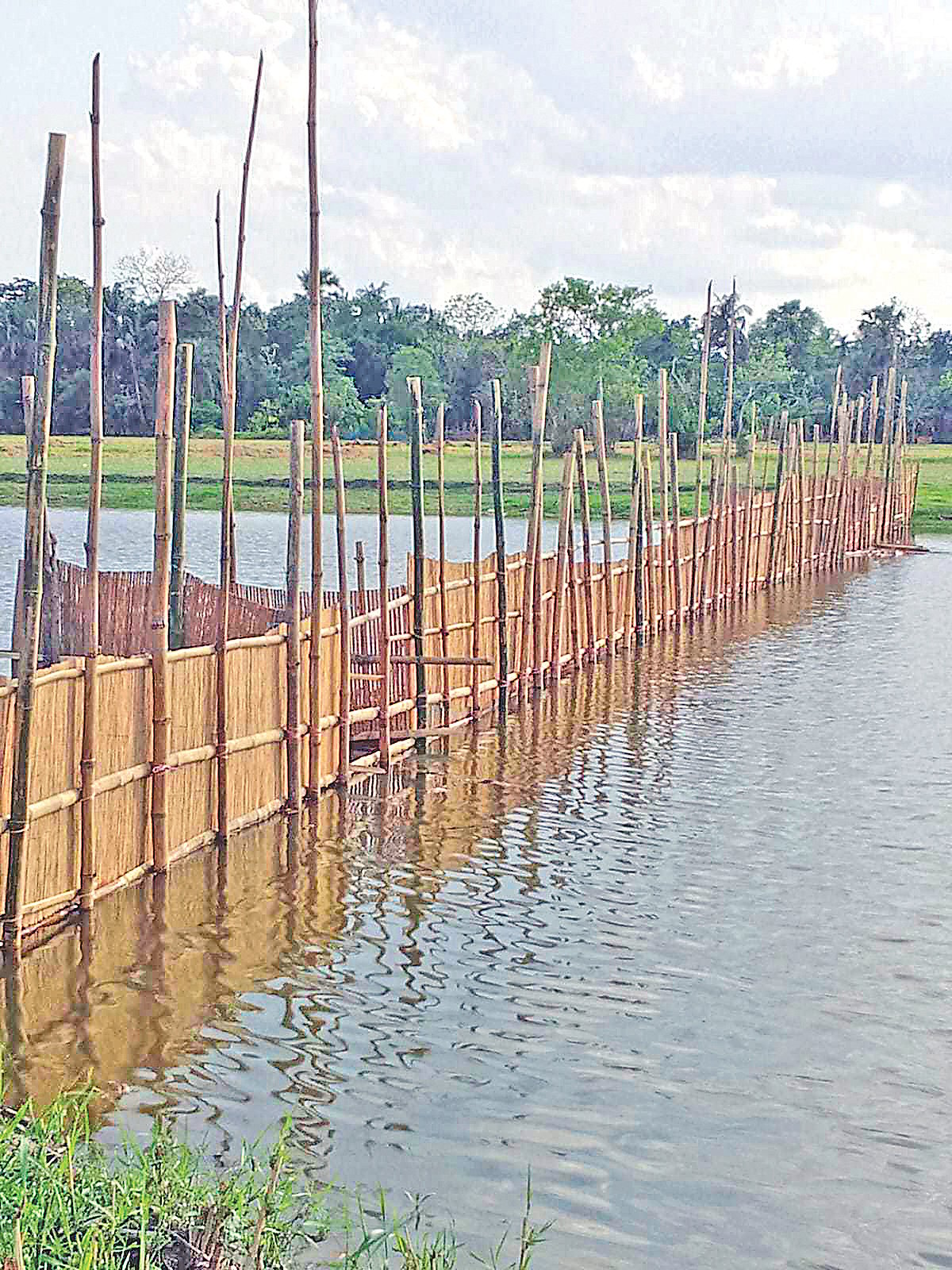
The High Court of Bangladesh has ordered the removal of bamboo structures from the Amtolia River in Batiaghata Upazila, Khulna, within seven days. The directive was issued by a bench comprising Justice Md. Habibul Gani and Justice Syed Mohammad Dairul Hossain, following an initial hearing on a writ petition. The order mandates that the Khulna District Commissioner and the Batiaghata Upazila Nirbahi Officer, among other respondents, must implement the removal. The writ petition was filed by human rights and environmental organization Human Rights and Peace for Bangladesh (HRBP), represented by two lawyers, citing a Prothom Alo newspaper report from July 25th titled 'This River Leased for One Lakh Taka.' The court also issued a rule, asking why the administration's inaction in preventing river encroachment through bamboo fencing should not be declared illegal and why the removal of these structures should not be ordered. The environmental secretary, land secretary, water resources ministry secretary, director general of the Department of Environment, and the Khulna District Commissioner are required to respond to the rule within four weeks. Senior lawyer Monjil Morshed argued the petition, stating that obstructing natural water flow or movement within a river is illegal according to environmental laws and previous High Court rulings declaring rivers as living entities. He emphasized that local administrations lack the legal authority to permit bamboo fencing, even if they lease the river. The court has instructed the respondents to submit a report on the implementation of the order within three weeks, with the next hearing scheduled for August 20th. The Prothom Alo report detailed that the Amtolia River was leased for BDT 110,000 in 2023 by the Khulna District Administration, leading to the erection of bamboo fences and nets that effectively stopped local fishing and water usage. The lease was reportedly granted by showing the river as a closed water body. Following the report, the local administration conducted an operation last Saturday, removing approximately 15,000 meters of nets.
The High Court's intervention highlights a systemic conflict between resource leasing practices and environmental protection mandates, particularly concerning vital waterways. The court's order to remove bamboo structures, based on a journalistic report and a writ petition, underscores the potential for administrative oversight or complicity in activities that obstruct natural river flows and local access. This situation raises questions about the governance frameworks governing river leases and the effectiveness of environmental regulations in preventing encroachment. The judiciary's role here is crucial in upholding ecological balance and public interest against potentially exploitative leasing arrangements. Moving forward, a review of the criteria and oversight mechanisms for river leasing, alongside stricter enforcement of environmental laws, may be necessary to prevent recurrence and ensure the long-term health of riverine ecosystems in the face of development and resource utilization pressures.
AI-generated to prompt reflection — not editorial opinion, not advice, not a statement of fact. How this works.