Hisense Unveils Ultra-Short-Throw 4K Laser Projector for Immersive Home Entertainment
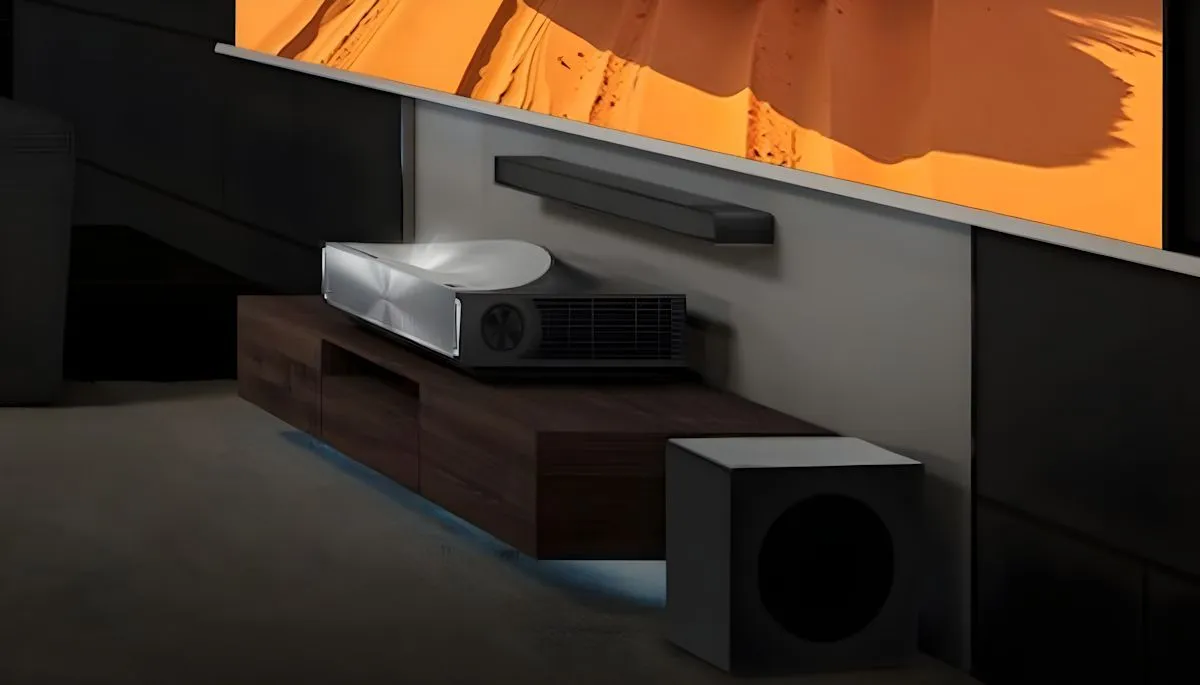
Hisense has introduced a new ultra-short-throw (UST) laser projector designed to deliver a large, high-quality image from a minimal distance to the wall. This innovative projector aims to simplify home entertainment setups by eliminating the need for complex ceiling mounts or long cable runs. Its design allows it to be placed on a cabinet or sideboard directly against a wall, avoiding obstructions like furniture behind the viewing area. The projector is capable of producing 4K imagery, offering a significant upgrade in visual fidelity for home cinema enthusiasts. This technology is particularly appealing for those seeking a large screen experience without the space constraints or installation complexities associated with traditional projectors or very large televisions. The UST projector falls under the Home Entertainment, Consumer Tech, and Technology categories, highlighting its position in the modern electronics market. It is marketed as a "Laser TV" solution, suggesting it's an all-in-one device suitable for streaming content directly. Hisense's offering competes in a growing market for advanced display technologies that prioritize convenience and visual impact.
The development of ultra-short-throw laser projectors like Hisense's new 4K model addresses a key consumer desire for large-screen entertainment without the installation hurdles of traditional projectors. By enabling placement inches from a wall, these devices mitigate common aesthetic and practical challenges in home setups, such as visible wiring and ceiling mounts. This innovation aligns with broader technological trends toward integrated, user-friendly consumer electronics, reducing the technical barrier to entry for immersive viewing experiences. As display technology evolves, UST projectors represent a significant market segment, potentially challenging the dominance of large-format televisions by offering comparable screen sizes with greater installation flexibility and potentially lower long-term energy costs. The competitive landscape will likely drive further advancements in brightness, color accuracy, and smart features within this category over the next decade.
AI-generated to prompt reflection — not editorial opinion, not advice, not a statement of fact. How this works.