Historic São Bartolomeu Church in Ouro Preto Reopens After Seven-Year Restoration
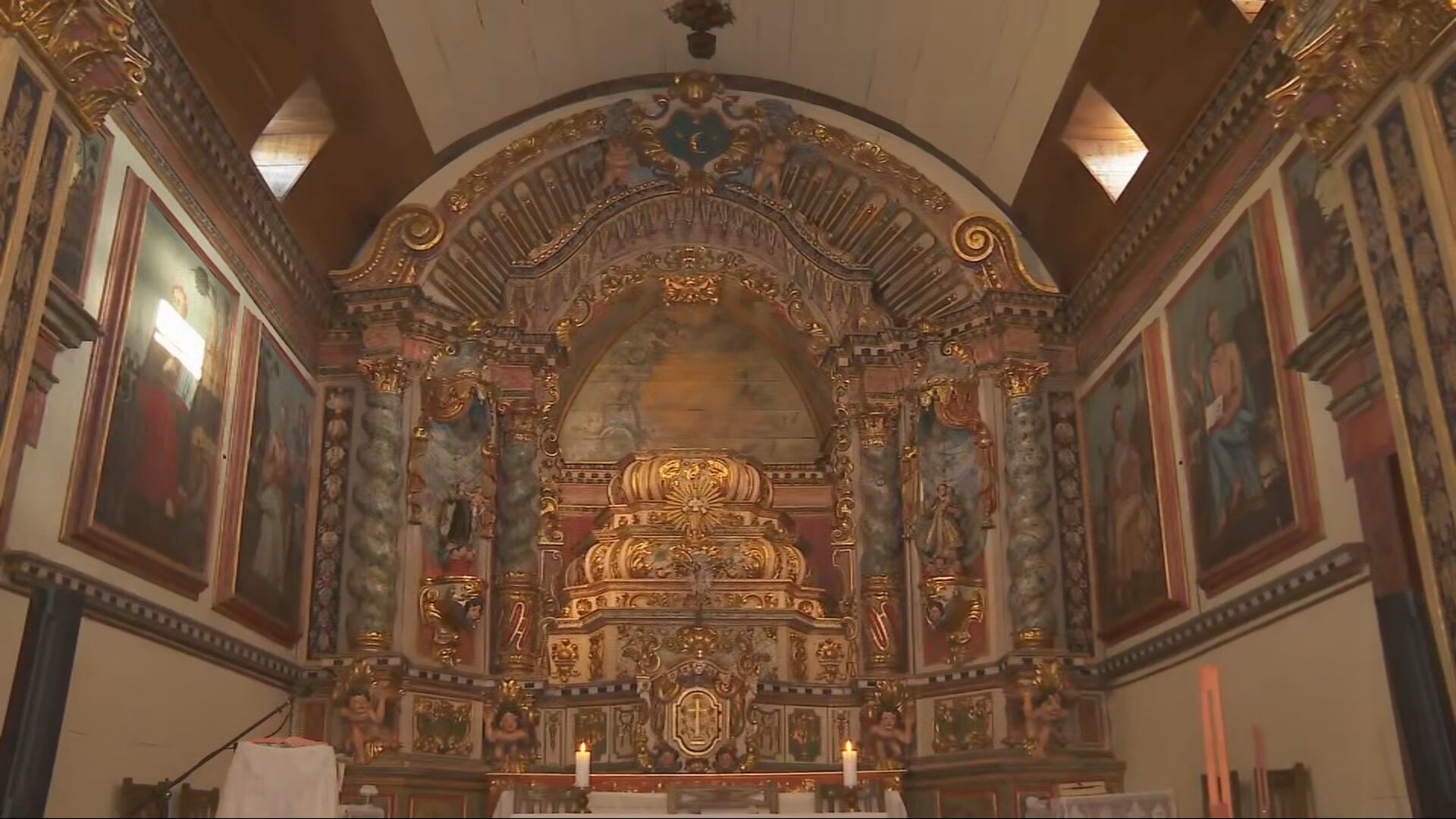
The Matriz de São Bartolomeu church, located in the São Bartolomeu district of Ouro Preto, Minas Gerais, has reopened its doors to the public after a seven-year restoration project. The reopening was marked by a well-attended mass on Tuesday, November 7th, with local faithful expressing joy and awe at the completed work. Constructed in the first half of the 18th century, the church is one of the oldest in the state and was recognized for its historical significance by the National Historical and Artistic Heritage Institute (Iphan) in the 1960s. Before the extensive renovation, numerous hidden paintings were present on the altars and ceiling. The restoration process involved significant structural repairs, as explained by José Theobaldo Júnior, director-president of Joaquim Artes e Ofícios, the entity overseeing the project. The initial phase focused on critical infrastructure, addressing precarious conditions that posed a risk. A substantial portion of the church's structural supports, estimated at 70%, were found to be compromised and required replacement to ensure the building's stability. The total cost of the restoration amounted to R$ 7.6 million, with funding primarily sourced from the Public Prosecutor's Office of Minas Gerais (MPMG) through fines collected for heritage violations. Parishioners like Lidiane Aparecida de Carvalho described the renewed space as brilliantly radiant, while Father Harley Carlos de Carvalho emphasized the church's beauty as a reflection of divine splendor and a source of hope and historical continuity for the community.
The reopening of the Matriz de São Bartolomeu church after a seven-year restoration highlights the complex interplay between heritage preservation, public funding, and community engagement. The significant investment of R$ 7.6 million, derived from fines for heritage violations, underscores a public commitment to safeguarding historical assets. However, the extensive structural issues encountered, requiring the replacement of 70% of supporting elements, suggest a potential underestimation of the decay or a long period of deferred maintenance prior to the intervention. This event prompts reflection on the long-term financial sustainability of maintaining such historical structures and the proactive measures needed to prevent critical deterioration. Future efforts may benefit from exploring diversified funding models and advanced structural monitoring technologies to ensure the enduring legacy of these irreplaceable cultural landmarks against the pressures of time and environmental factors.
AI-generated to prompt reflection — not editorial opinion, not advice, not a statement of fact. How this works.