Hitler's Birthplace in Austria to Become Police Station
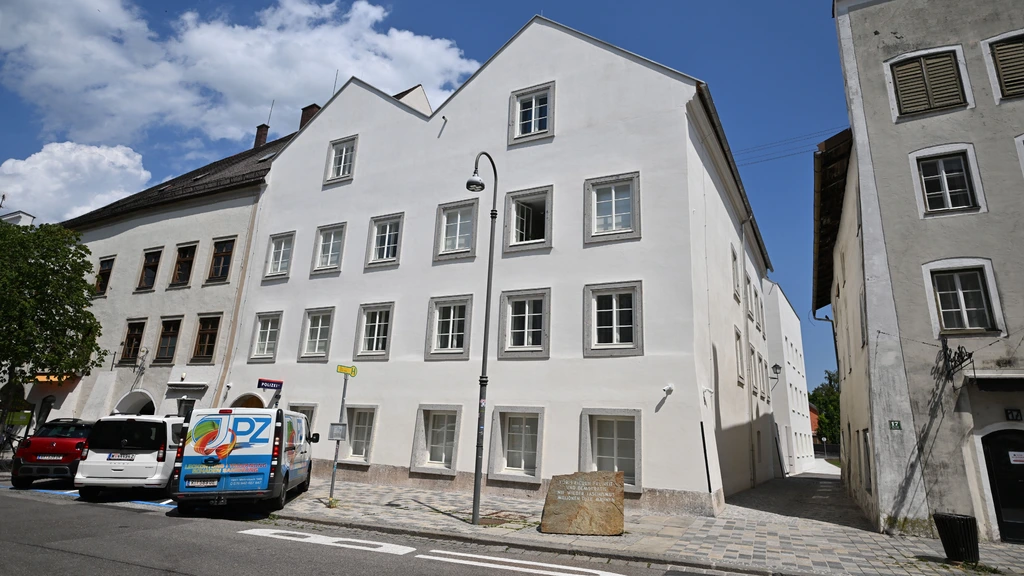
A new police station is set to open in Braunau am Inn, Austria, in the very house where Adolf Hitler was born in 1889. The three-story building has been in private ownership for decades following Hitler's death. Approximately ten years ago, it was expropriated by the state after a lengthy legal battle.
Authorities aim to transform the property into a police station to prevent it from becoming a shrine for neo-Nazis. The house had reportedly become a site where individuals, described by Der Spiegel as "hardened Nazis and neo-Nazis," would gather, pose for selfies, and leave behind forbidden symbols. Online maps openly identified the location as "Adolf Hitler's birthplace," and some local businesses capitalized on this morbid tourism by selling Hitler-themed merchandise. In response, a memorial stone inscribed with a message of peace and a warning against fascism was placed in front of the house, though it has been vandalized.
In 2016, Austria passed a special law to acquire the property, compensating the owner with approximately 800,000 euros. The Ministry of the Interior has managed the building since then. While demolition was initially considered, a commission advised against it, recommending instead a "social-charitable" or "administrative" use to avoid denying the site's history. The renovation cost around 20 million euros, and the station will house local police and district command officers. Oliver Rathkolb, a former commission member, noted that while initially hesitant due to historical police collaboration with the Nazis, he now sees the police presence as a way to "protect democracy" and crucially, to "break the myth of Hitler's birthplace."
The repurposing of Adolf Hitler's birthplace in Braunau am Inn from a site of historical notoriety to a functional police station represents a strategic effort by Austrian authorities to reclaim and neutralize a location that had become a focal point for neo-Nazi pilgrimage and morbid tourism. By embedding a symbol of democratic order and law enforcement within the structure, the state aims to disrupt the site's symbolic power and prevent its co-option by extremist ideologies. This approach, which avoids demolition or the creation of a potentially venerated museum, aligns with a strategy of historical management focused on functional integration rather than memorialization. The significant investment in renovation underscores the state's commitment to this symbolic act, highlighting the long-term challenge of confronting and mitigating the enduring appeal of historical figures and ideologies in the digital age.
AI-generated to prompt reflection — not editorial opinion, not advice, not a statement of fact. How this works.