Holocaust Survivors President Sees Parallels Between Rising Antisemitism and Nazi Germany
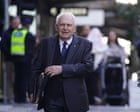
George Foster, president of the Australian Association of Jewish Holocaust Survivors and Descendants, has drawn attention to what he describes as "disturbing parallels" between the current rise in antisemitism in Australia and the social atmosphere of Nazi Germany. He made these remarks while testifying before the antisemitism royal commission. Foster clarified that he does not believe Australia is transforming into a replica of Germany in the 1930s. However, he expressed concern that certain aspects of the current social climate bear resemblance to that historical period. He emphasized that Australia's democratic institutions are fundamentally different from those of Nazi Germany. Despite these differences, Foster feels compelled to acknowledge the unsettling similarities he perceives in the prevailing social mood. His testimony highlights the profound impact of historical events on contemporary perceptions of societal trends and the anxieties they can generate within targeted communities.
The testimony highlights a significant societal concern regarding the resurgence of antisemitism and its perceived echoes of historical persecution. While acknowledging the fundamental differences in Australia's democratic framework compared to Nazi Germany, the comparison underscores the gravity with which such trends are viewed by those with direct historical experience. This perspective prompts reflection on the societal conditions that enable the growth of prejudice and the importance of robust democratic institutions in safeguarding against discrimination. The analysis should focus on the systemic factors that contribute to rising intolerance and the mechanisms available within democratic societies to counter such movements, rather than drawing direct equivalences. Understanding the psychological and social dynamics that foster group-based animosity is crucial for developing effective preventative strategies.
AI-generated to prompt reflection — not editorial opinion, not advice, not a statement of fact. How this works.