Hong Kong's 'Eye for Space' Instrument Begins Operations on China's Tiangong Space Station
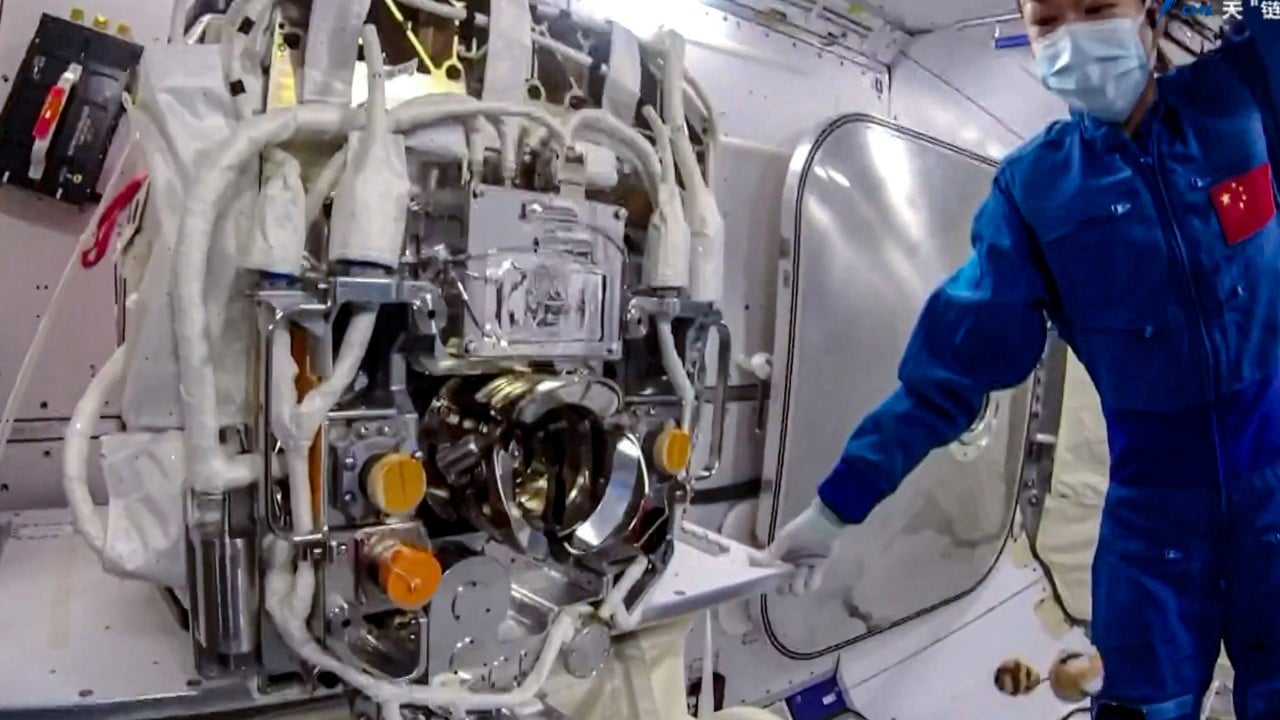
A sophisticated greenhouse gas monitoring instrument, developed by the Hong Kong University of Science and Technology (HKUST) and known as the Multi-Spectral Imaging Carbon Observatory (Musico) or 'Eye for Space', has begun its mission aboard China's Tiangong space station. The instrument was successfully installed by Lai Ka-ying, the first astronaut from Hong Kong. Musico is designed to monitor greenhouse gas emissions and is expected to operate in orbit for a minimum of two years. This development marks a significant achievement for Hong Kong's scientific and technological capabilities, particularly in space exploration and environmental monitoring. The collaboration highlights China's commitment to international scientific partnerships and the utilization of its space infrastructure for global environmental research. The data collected by Musico is anticipated to provide valuable insights into carbon emissions, aiding in climate change research and mitigation efforts.
The deployment of the 'Eye for Space' instrument on the Tiangong space station represents a notable advancement in China's space-based environmental monitoring capabilities, with a significant contribution from Hong Kong's scientific community. This initiative aligns with global efforts to track greenhouse gas emissions, a critical component in understanding and addressing climate change. The project underscores the strategic importance of space infrastructure for scientific research and international collaboration. Future advancements in this area could involve enhanced sensor technology for more granular data collection and integration with terrestrial monitoring networks to create comprehensive climate models. The long-term success will depend on sustained investment, data sharing protocols, and the effective translation of scientific findings into actionable climate policies.
AI-generated to prompt reflection — not editorial opinion, not advice, not a statement of fact. How this works.