Hong Wang Becomes Third Woman and First Chinese Recipient of Fields Medal
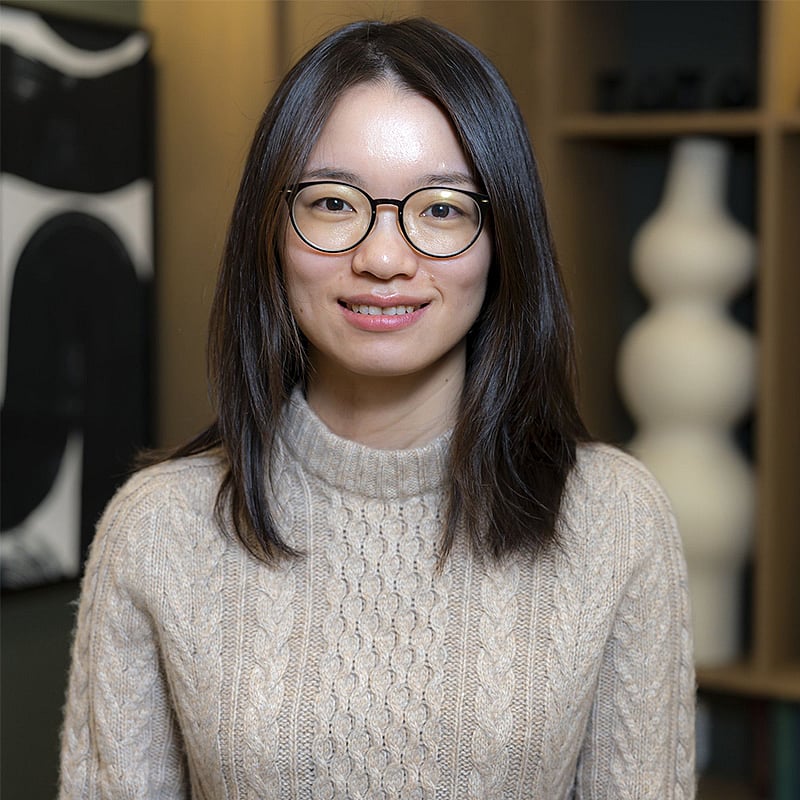
Chinese mathematician Hong Wang, 35, has been awarded the prestigious Fields Medal, often referred to as the Nobel Prize of mathematics. The award ceremony took place in Philadelphia, USA, in July 2026 during the International Congress of Mathematicians. This makes Wang the third woman and the first Chinese national to receive this honor in the 90-year history of the award, which began in 1936. Wang was born in China in 1991 and demonstrated exceptional talent early on, entering Peking University at 16. She later earned her Ph.D. from the Massachusetts Institute of Technology (MIT) and currently holds positions at New York University (NYU) and IHES in France. Her groundbreaking work focuses on harmonic analysis and geometric measure theory. Notably, she solved the 50-year-old Kakeya conjecture in three dimensions, a complex geometric problem concerning the minimum area required to rotate a line segment of a fixed length in 3D space. The Fields Medal, named after Canadian mathematician John Charles Fields, is awarded every four years to mathematicians under 40. Out of 68 recipients to date, only three have been women: Maryam Mirzakhani from Iran (2014), Maryna Viazovska from Ukraine (2022), and now Hong Wang (2026). Wang's achievement underscores the significant contributions of women in mathematics.
The awarding of the Fields Medal to Hong Wang highlights a positive trend of increasing female representation in advanced mathematics, a field historically dominated by men. While Wang's individual brilliance is evident in her solution to the Kakeya conjecture, her recognition also reflects broader systemic efforts to promote diversity and inclusion in STEM fields. The historical context of only three female recipients in 90 years underscores the persistent challenges women have faced in accessing and advancing within these disciplines. Future progress will depend on continued institutional support, mentorship programs, and fostering an academic environment that equitably values diverse perspectives and contributions, ensuring that talent from all backgrounds can reach its full potential in shaping the future of mathematics and science.
AI-generated to prompt reflection — not editorial opinion, not advice, not a statement of fact. How this works.