Horkheimer and Adorno: The Odyssey as a Dialectic of Enlightenment
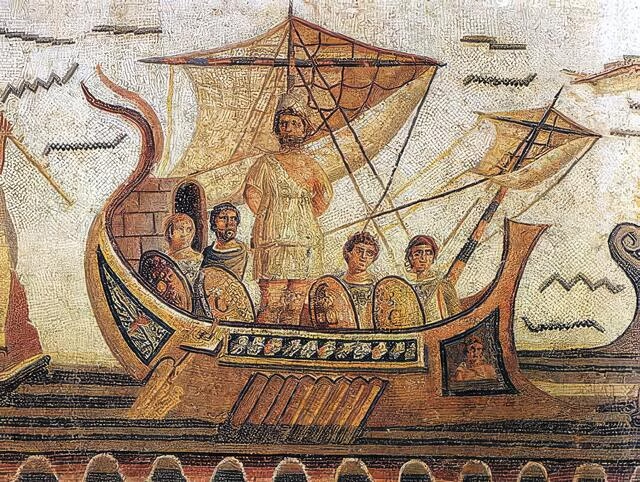
Max Horkheimer and Theodor Adorno viewed Homer's Odyssey as a testament to the dialectic of enlightenment. They argued that just as the myth of the Sirens within the epic combines myth and rational labor, the Odyssey as a whole reflects this interplay. This perspective was central to their inclusion of the epic in their critical evaluation of the Enlightenment. Horkheimer and Adorno recognized the historical context of the Odyssey, yet they found its narrative to be a profound illustration of their philosophical concepts. Their work, "Dialectic of Enlightenment," explores how reason, while intended to liberate humanity, can paradoxically lead to new forms of domination. The Odyssey, with its themes of journey, temptation, and eventual return, served as a powerful metaphor for this complex process. The authors used the epic to demonstrate how the very tools of reason and progress can contain the seeds of their own regression. This interpretation highlights the enduring relevance of classical literature in understanding fundamental philosophical questions.
Horkheimer and Adorno's interpretation of the Odyssey through the lens of the "Dialectic of Enlightenment" offers a critical perspective on the dual nature of reason. By linking the ancient epic to their mid-20th-century critique, they highlight how the pursuit of rational control, even when aimed at liberation, can inadvertently foster new forms of subjugation. This framework prompts consideration of how technological advancement and societal progress, while seemingly beneficial, might contain inherent contradictions that could lead to unintended negative consequences. The analysis suggests that understanding these dialectical tensions is crucial for navigating the complexities of modern governance and technological integration over the next decade.
AI-generated to prompt reflection — not editorial opinion, not advice, not a statement of fact. How this works.