Horses Rented From Cholon Bil to Cultivate Boro Rice in Barind Region
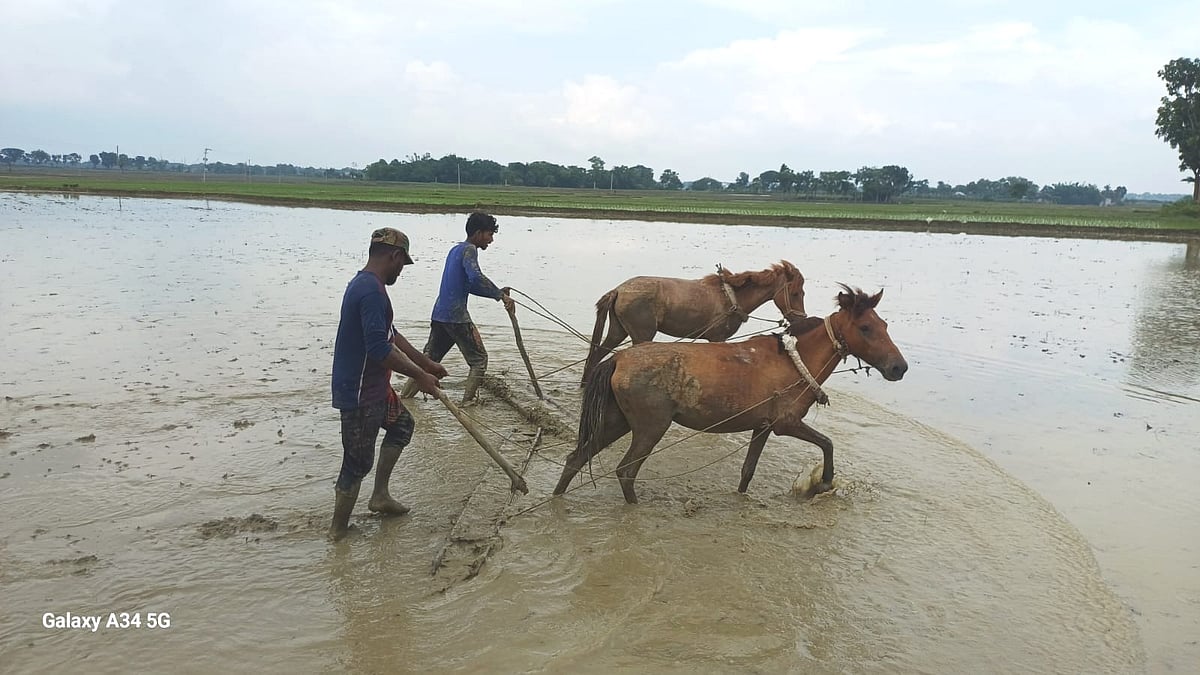
Farmers in the Barind region are utilizing horses rented from Cholon Bil for the cultivation of Boro rice. This practice is helping to till the land efficiently. According to horse owners, four horses are currently plowing at least 20 bighas of land daily in the village. This agricultural method highlights the reliance on traditional resources and animal power for farming operations in the area. The use of horses for plowing indicates a specific agricultural need and perhaps a cost-effective solution for local farmers. The collaboration between horse owners and farmers ensures the timely preparation of fields for the Boro rice season. This practice is a testament to the enduring role of animal husbandry in supporting agricultural productivity in certain rural economies.
The integration of animal power, specifically horses, into modern agricultural practices for Boro rice cultivation in the Barind region demonstrates a pragmatic adaptation to local resource availability and economic conditions. This approach, while rooted in tradition, offers a potentially sustainable and cost-effective alternative to mechanization, particularly in areas where access to or affordability of machinery may be limited. The daily tilling of 20 bighas by four horses suggests a significant contribution to agricultural output. This scenario prompts consideration of the long-term viability of such methods in the face of evolving agricultural technologies and environmental pressures. It also raises questions about the economic incentives for horse owners and the broader implications for rural employment and land management within the agricultural sector.
AI-generated to prompt reflection — not editorial opinion, not advice, not a statement of fact. How this works.