Hospitals Lack Emergency Plans for Mass Casualties, Experts Say
Hospitals in Bangladesh lack comprehensive plans to manage mass casualty events, such as earthquakes or major accidents, according to experts. The absence of such protocols hinders the ability to save lives when numerous individuals require immediate medical attention. Strengthening emergency services necessitates coordinated efforts and genuine commitment from the government, hospital authorities, politicians, and the media, as emergency departments are considered the face of any healthcare institution.
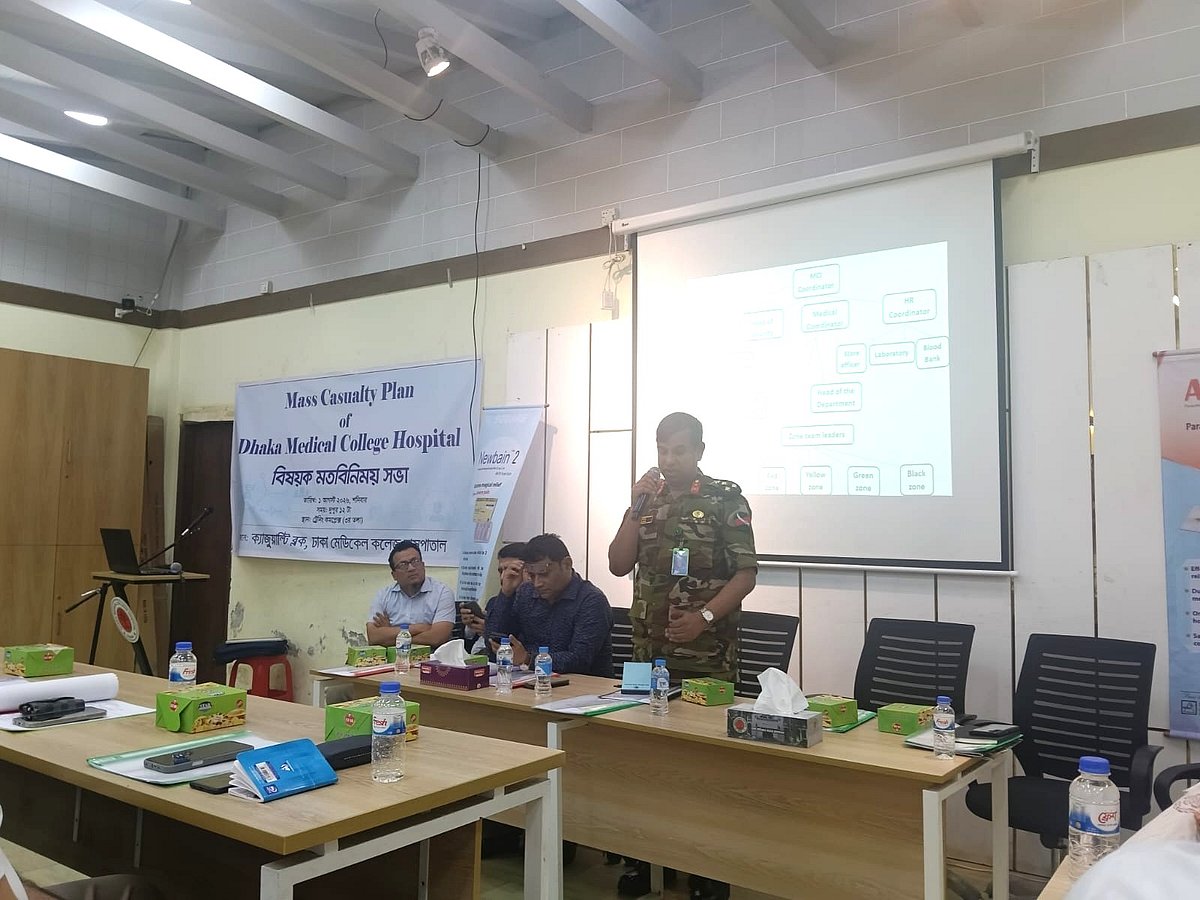
Discussions around a draft emergency medical plan took place at Dhaka Medical College Hospital on a Saturday, organized by its casualty department with support from Doctors Without Borders (MSF). This initiative is part of an effort to develop and implement an emergency treatment plan for the hospital. Dhaka Medical College Hospital's emergency department consistently faces a surge of patients from large-scale accidents, violence, and daily road incidents.
Brigadier General Md. Asaduzzaman, the hospital's director, stated that if other hospitals could absorb some of the patient load, Dhaka Medical College would see an improvement in the quality of care for its injured patients. He also noted a significant difference in patient intake compared to typical hospitals: while most hospitals admit 80% of patients from outpatient departments and 20% from emergency, Dhaka Medical College sees the reverse, with 80% of admissions originating from its emergency department.
During the event, Associate Professor Mostak Hossain of the casualty department presented a draft plan, emphasizing that a structured approach improves patient management, treatment, and can prevent some deaths. His proposal detailed coordination among various departments, increasing personnel, managing medical supplies, and patient handling. He outlined that in major accidents, patients are typically categorized as 50-70% minor (green), 20-30% moderate, and 10-20% critical. Effective triage, the process of sorting these patients, is crucial for optimal emergency care.
Several senior physicians and attendees highlighted challenges in managing the crowds of relatives accompanying patients during emergencies, with some noting interference from political figures and their supporters. Complaints were also raised about journalists, with suggestions for establishing formal channels for information dissemination to reduce overcrowding. Some proposed establishing entirely separate emergency departments. A representative from MSF, Md. Jamil, who has worked in Bangladesh since 1972, stressed that a plan alone is insufficient; it requires regular drills and practice to identify and rectify its flaws.
The current emergency medical infrastructure in Bangladesh appears to be reactive rather than proactive, with a notable absence of robust, pre-defined protocols for mass casualty incidents. This systemic gap poses a significant risk to public health, particularly in a region prone to natural disasters and high rates of road accidents. The reliance on Dhaka Medical College Hospital as a primary destination for severe cases, while indicative of its capacity, also highlights a potential imbalance in resource distribution and a need for greater inter-hospital collaboration. The challenges posed by external interference from political figures and the public underscore broader governance issues within healthcare institutions, suggesting that operational efficiency is frequently undermined by non-medical pressures. Moving forward, a critical focus should be on developing and rigorously testing standardized emergency response frameworks, fostering inter-institutional cooperation, and establishing clear communication channels with the public and media to manage expectations and resources effectively. Implementing regular, realistic drills will be essential to ensure preparedness and identify vulnerabilities in the existing systems before a crisis occurs.
AI-generated to prompt reflection — not editorial opinion, not advice, not a statement of fact. How this works.