Hot Air Balloons Cause Power Outages and Fires in São José dos Campos
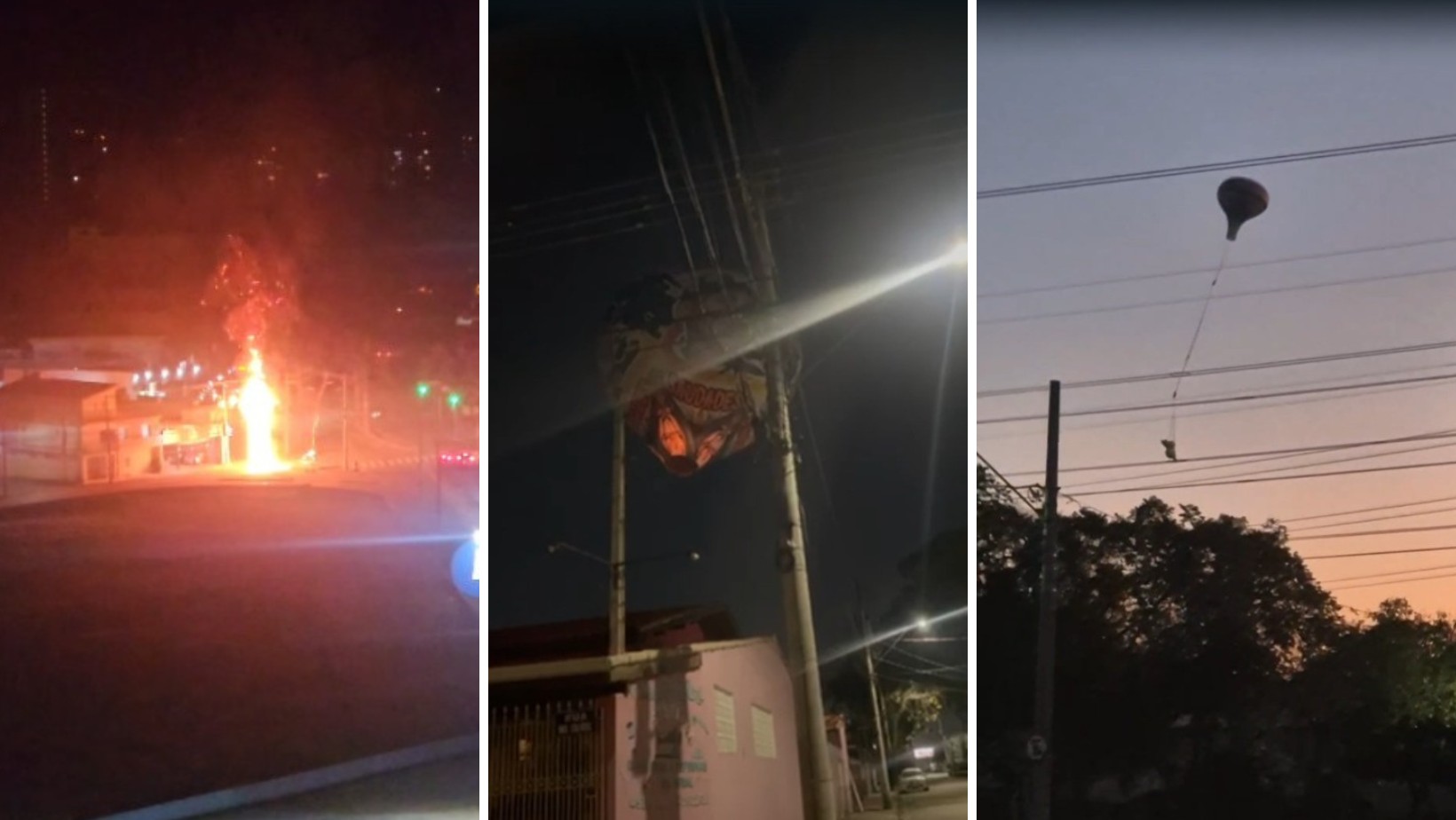
Several incidents involving falling hot air balloons occurred in São José dos Campos on Thursday, November 9th, causing power disruptions and small fires, though no injuries were reported. The Fire Department responded to two official calls: one where a balloon fell onto power lines, causing a short circuit and requiring joint action with the energy company. Another incident involved a balloon landing on a residence, igniting small fires that were quickly extinguished. The Civil Defense also observed a balloon fall near power lines via surveillance cameras, which did not result in spreading flames. Residents captured videos of other balloons, including one that lost altitude near Linha Verde and another that fell in flames near homes and a school in Santa Inês III, causing alarm but no major infernos. A balloon was also seen over Urbanova, with its landing spot unconfirmed, and another fell in a difficult-to-access peat area in Banhado. The release of hot air balloons is a prohibited environmental crime in Brazil, punishable by up to three years in prison and a fine, due to the significant fire risk they pose.
The recurring issue of falling hot air balloons in populated areas highlights a persistent challenge in enforcing environmental and safety regulations. Despite clear legal prohibitions and the inherent risks of fire and electrical hazards, the practice continues, suggesting a gap between legislation and its effective implementation or public adherence. This situation presents a systemic risk that could be mitigated through enhanced public awareness campaigns, stricter enforcement mechanisms, and potentially exploring technological solutions for detection and deterrence. The incidents underscore the tension between cultural practices and public safety imperatives, a dynamic that will likely intensify as urban density increases and technological advancements offer new means of both engagement and intervention.
AI-generated to prompt reflection — not editorial opinion, not advice, not a statement of fact. How this works.