How Long Can People Survive Under Rubble After an Earthquake?
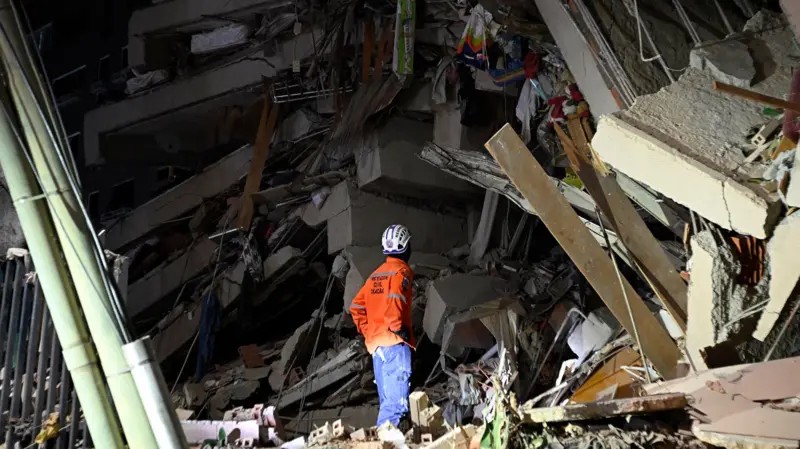
Following two powerful earthquakes that struck Venezuela on June 24, with magnitudes of 7.2 and 7.5, causing widespread building collapses and at least 250 structures to be severely damaged, international rescue teams have been deployed. The second quake was the strongest to hit the country since 1900. The survival time for individuals trapped under debris is contingent upon several critical factors, including their position when trapped, access to air and water, prevailing weather conditions, and their physical state. While most rescues occur within the first 24 hours, remarkable cases of survival days later do exist, such as a 3-year-old child rescued on June 30. The United Nations typically concludes search and rescue operations five to seven days post-disaster, usually when no survivors are found for a consecutive day or two.
Experts emphasize that the victim's position can significantly increase survival chances by creating an "air pocket" and minimizing injury. Adopting a "duck and cover" posture, as advised by organizations like Turkey's Akut, is crucial. Preparation through education and awareness of emergency measures is often overlooked but vital. Access to air and water is paramount; dehydration can become critical within days, with estimates suggesting humans can survive three to seven days without water. Severe injuries, such as head trauma or internal bleeding, drastically reduce survival odds, especially in confined spaces with limited air. Post-rescue medical care is also critical, particularly to manage crush syndrome, where muscle damage from pressure releases toxins into the bloodstream.
Environmental factors like temperature play a significant role. Extreme cold can lead to hypothermia, while extreme heat can accelerate dehydration. Mental fortitude and self-control are also crucial, with experts advising victims to manage fear, conserve energy, and maintain a strong will to survive. Historical accounts, such as a man rescued 10 days after a 1995 earthquake in South Korea after drinking rainwater and eating cardboard, highlight the resilience of the human spirit under extreme duress.
The survival of individuals trapped in earthquake rubble is a complex interplay of immediate physical circumstances and preparedness. While external rescue efforts are critical, the analysis highlights the significant impact of individual positioning, access to basic resources like air and water, and psychological resilience. The effectiveness of preparedness measures, such as "duck and cover" training, underscores a systemic gap in disaster readiness, where community-level education can demonstrably improve survival outcomes. Furthermore, the influence of environmental conditions and the physiological challenges of dehydration and crush syndrome point to the need for advanced medical protocols and rapid post-rescue care. Looking ahead, integrating predictive modeling for debris environments and optimizing resource allocation for prolonged rescue operations, alongside robust public education campaigns, will be essential for mitigating future losses in seismically active regions.
AI-generated to prompt reflection — not editorial opinion, not advice, not a statement of fact. How this works.