How Rupchanda's Flat Body Aids Its Speed
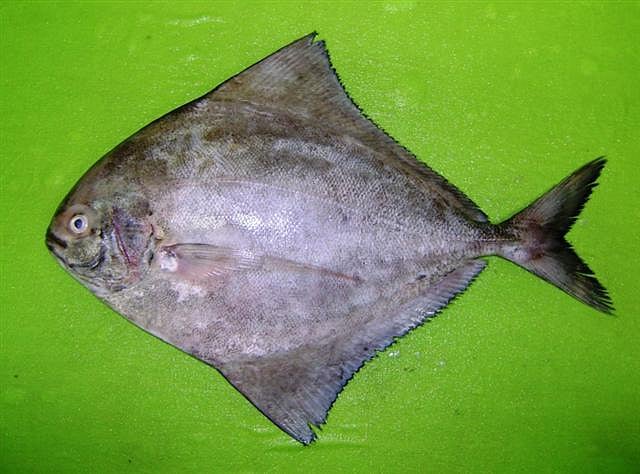
The Rupchanda fish, also known as the 'chaptā sharīr' (flat body), benefits significantly from its body shape when it comes to speed and efficiency in water. Water is considerably denser than air, meaning that moving through it requires more force and energy, especially for fish with thicker bodies. A flat body shape, like that of the Rupchanda, helps to reduce this resistance. This is particularly advantageous when the fish swims on its side, allowing it to navigate through the water with less effort and greater speed.
The Rupchanda's flattened physique represents an elegant evolutionary adaptation to aquatic locomotion. By minimizing hydrodynamic drag, its body shape optimizes energy expenditure, a critical factor for survival and predation in a dense medium like water. This design principle, reducing resistance through streamlined form, is a recurring theme in efficient movement across various environments, from biological organisms to engineered vehicles. Understanding such bio-mimicry can offer insights into developing more energy-efficient technologies in the future, highlighting the long-term advantages of form-function optimization.
AI-generated to prompt reflection — not editorial opinion, not advice, not a statement of fact. How this works.