How to Shift Blame for Your Mistakes Onto Others
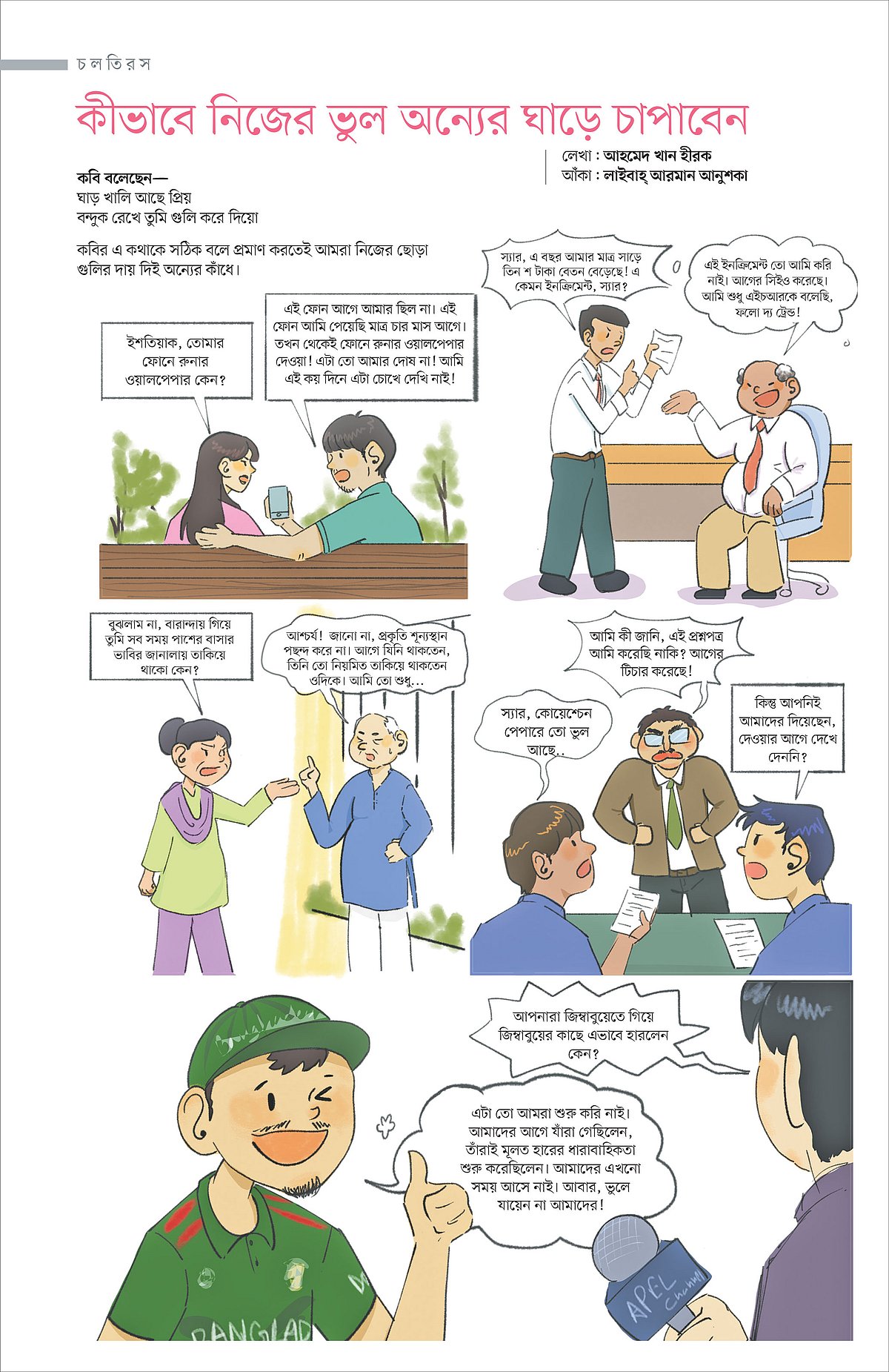
This article, accompanied by an illustration by Laibah Arman Anusha, discusses the human tendency to avoid taking responsibility for errors. It explores the psychological mechanisms and social dynamics that lead individuals to deflect blame. The piece delves into common tactics used to shift accountability, such as making excuses, pointing fingers at colleagues or circumstances, or minimizing the impact of the mistake. It suggests that understanding these behaviors is the first step toward fostering a more accountable environment. The underlying message emphasizes the importance of self-awareness and integrity in professional and personal interactions. The illustration likely serves to visually represent the concept of blame-shifting.
The psychological phenomenon of blame-shifting, while common across human societies, presents challenges for organizational effectiveness and personal growth. In professional settings, a culture that implicitly or explicitly encourages deflecting responsibility can hinder innovation and collaboration, as individuals may fear repercussions for admitting errors. From a systems perspective, robust feedback mechanisms and leadership that models accountability are crucial for mitigating this behavior. Over the next decade, as AI systems become more integrated into decision-making processes, the ability to accurately attribute outcomes and learn from mistakes will become even more critical. Fostering an environment where constructive error analysis is valued over punitive blame assignment could lead to more resilient and adaptive organizations.
AI-generated to prompt reflection — not editorial opinion, not advice, not a statement of fact. How this works.