HSC Exam 2026: Students Advised to Study 'Literature as a Mirror of the Nation'
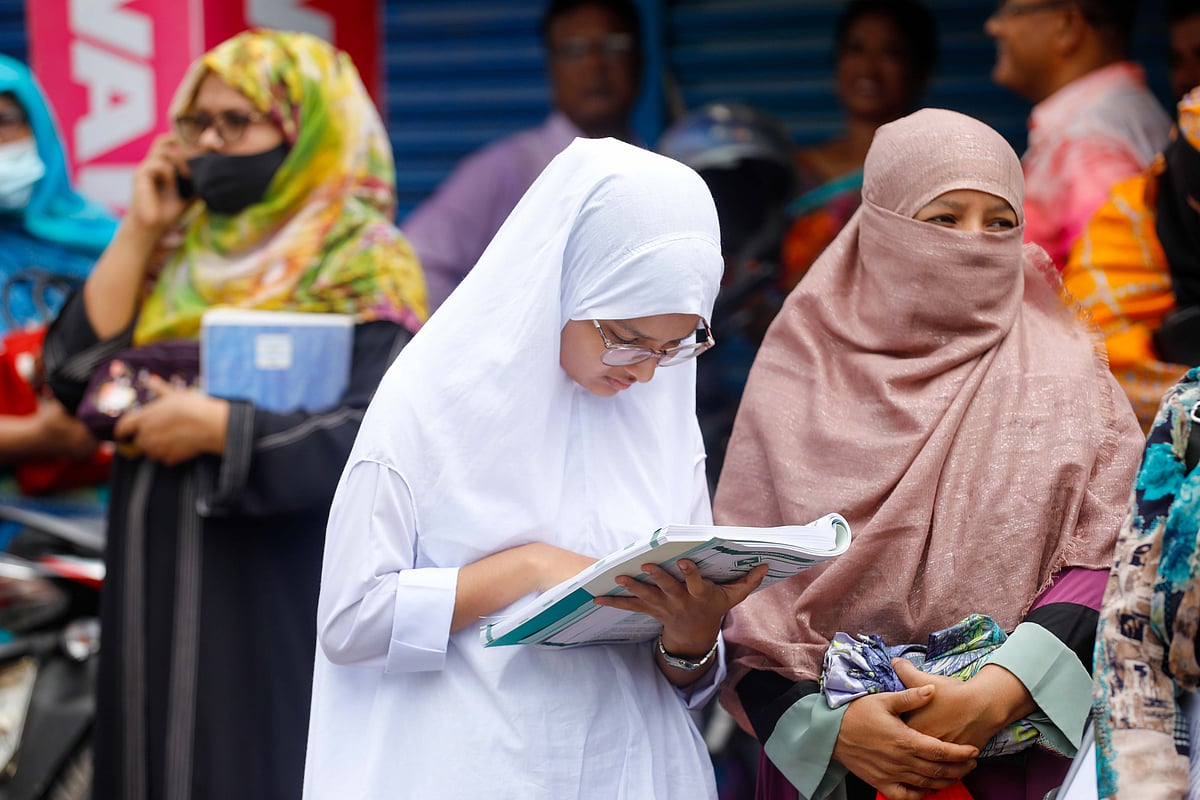
As the HSC exams approach in 2026, students are being advised to focus on the 'Bhabsamprasaran' (elaboration) section for Bengali Paper 2, specifically the topic 'Sahitya Jatir Darpan Swarup' (Literature is the Mirror of the Nation). This concept emphasizes that just as a mirror reflects one's appearance, literature mirrors a nation's history, traditions, emotions, and cultural identity, serving as a true reflection of its collective thoughts and aspirations.
Literature provides an avenue for the free expression of the human soul, articulating diverse and subtle feelings, and offering endless joy to both creators and readers. Beyond mere entertainment, it captures the real-life panorama of a nation's contemporary and historical existence. Writers, as integral members of society, possess a profound responsibility to observe and depict societal inconsistencies and transformations with deep insight, enriching the literary world by weaving reality with imagination. Literature delves into the psychological aspects of human experience, leading to the assertion that 'Literature is the criticism of life.'
While not a direct historical account, literature presents social conditions of a specific era more vibrantly than dry historical records. Ancient Bengali literature like 'Charyapada' reflects the social life, professions, culture, and struggles of ancient Bengal, while the 'Srikrishnakirtan' depicts medieval social customs and human relationships. Later works, such as Girish Chandra Ghosh's 'Sirajuddaula' and Syed Waliullah's 'Lalsalu,' immortalize historical tragedies and social exploitation, respectively. Munir Chowdhury's 'Kabor' and Zahir Raihan's 'Arek Phalgun' highlight the Language Movement, and novels about the Liberation War capture the atrocities of the Pakistani forces and collaborators alongside the bravery of Bengalis. Works by Rabindranath Tagore and Kazi Nazrul Islam address social issues like dowry and the spirit of resistance against British rule. Globally, Harriet Beecher Stowe's 'Uncle Tom's Cabin' documented the inhumanity of American slavery, Leo Tolstoy's 'War and Peace' explored the horrors of war, and the writings of Rousseau and Voltaire provided intellectual foundations for the French Revolution. Ultimately, literature serves as the bearer and carrier of a nation's entire way of life, revealing its true nature to the world.
This educational directive frames literature as a critical lens for understanding national identity and historical context, particularly relevant for students preparing for examinations. The emphasis on literature as a 'mirror of the nation' highlights its role in preserving and transmitting cultural memory, societal values, and historical narratives across generations. From a systemic perspective, educational curricula that integrate such thematic understanding can foster civic consciousness and a deeper appreciation for national heritage. However, the challenge lies in balancing the analytical study of literature with the often subjective and emotionally charged interpretations of national narratives. Future educational frameworks might consider how to equip students with critical tools to discern between historical representation and nationalistic rhetoric within literary works, ensuring a nuanced understanding that transcends simplistic mirroring and embraces diverse perspectives, especially in an era of rapidly evolving global and digital cultural influences.
AI-generated to prompt reflection — not editorial opinion, not advice, not a statement of fact. How this works.