Huawei's Tao's Law V2 Challenges Moore's Law with New Chip Scaling Framework
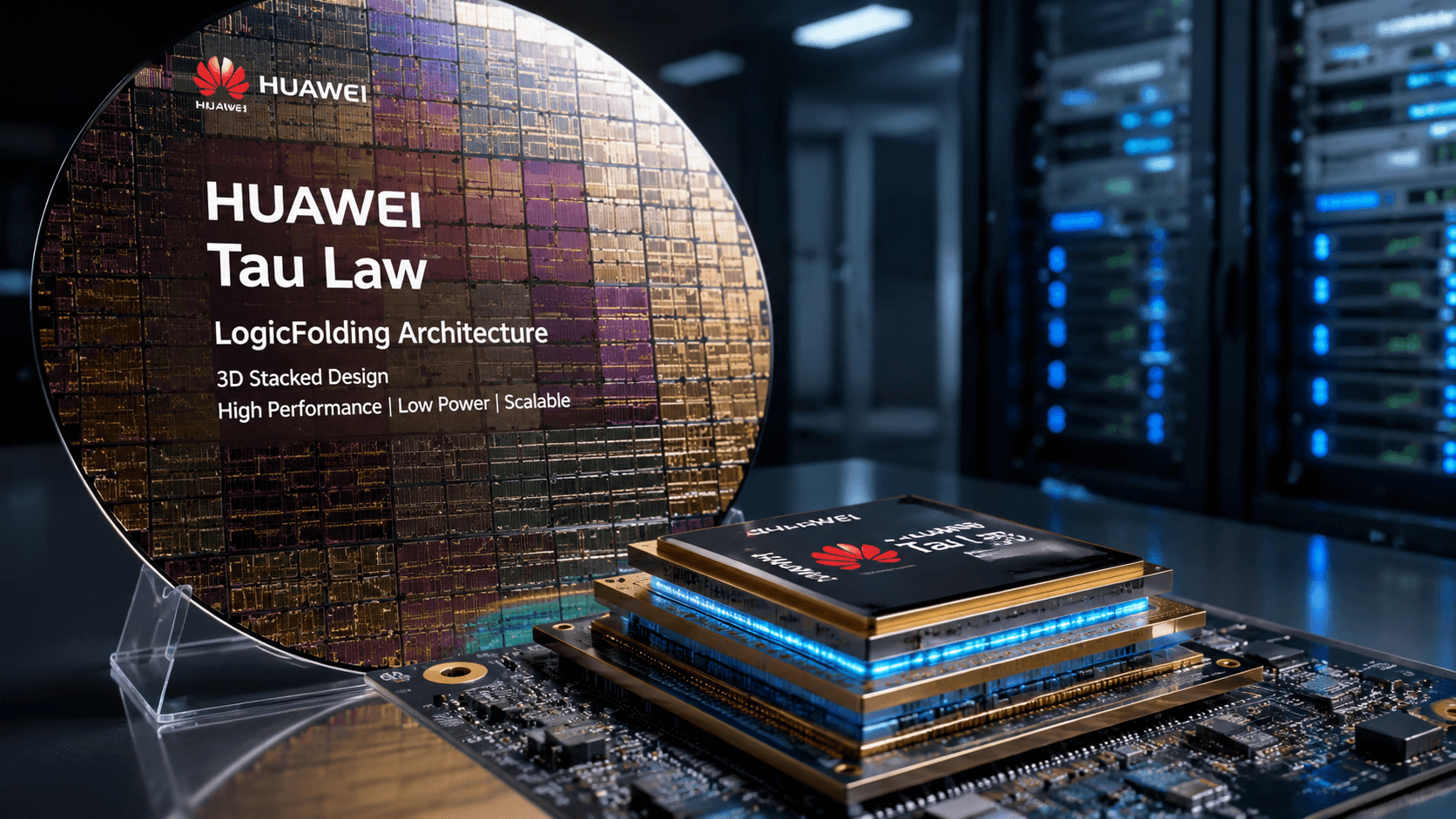
Huawei has introduced Tao's Law V2, a novel chip scaling framework that prioritizes the reduction of total system latency. This new approach directly challenges the long-standing Moore's Law, which has historically focused on transistor density. Tao's Law V2 is supported by tangible production data, demonstrating its practical viability. Huawei has also laid out a clear roadmap for this framework, projecting its application and development through to 2035. The company's initiative signals a potential shift in the semiconductor industry's focus from pure miniaturization to overall system performance. This development could influence future chip design and manufacturing strategies as the industry grapples with the limitations of traditional scaling methods. The framework aims to provide a more relevant metric for performance gains in the era of complex computing systems.
Huawei's introduction of Tao's Law V2 represents a strategic pivot in semiconductor scaling, moving beyond transistor count to system latency. This redefinition could address the diminishing returns of Moore's Law, particularly as complex AI workloads demand lower latency for optimal performance. The company's provision of production data and a long-term roadmap suggests a commitment to establishing a new industry benchmark. This initiative may incentivize other players to explore alternative scaling metrics, potentially fostering innovation in system-level optimization. The long-term implications involve a potential bifurcation in chip development strategies: one focused on continued miniaturization and another on holistic system efficiency.
AI-generated to prompt reflection — not editorial opinion, not advice, not a statement of fact. How this works.