Hubble Telescope Detects Unexpected Light from Distant Galaxy
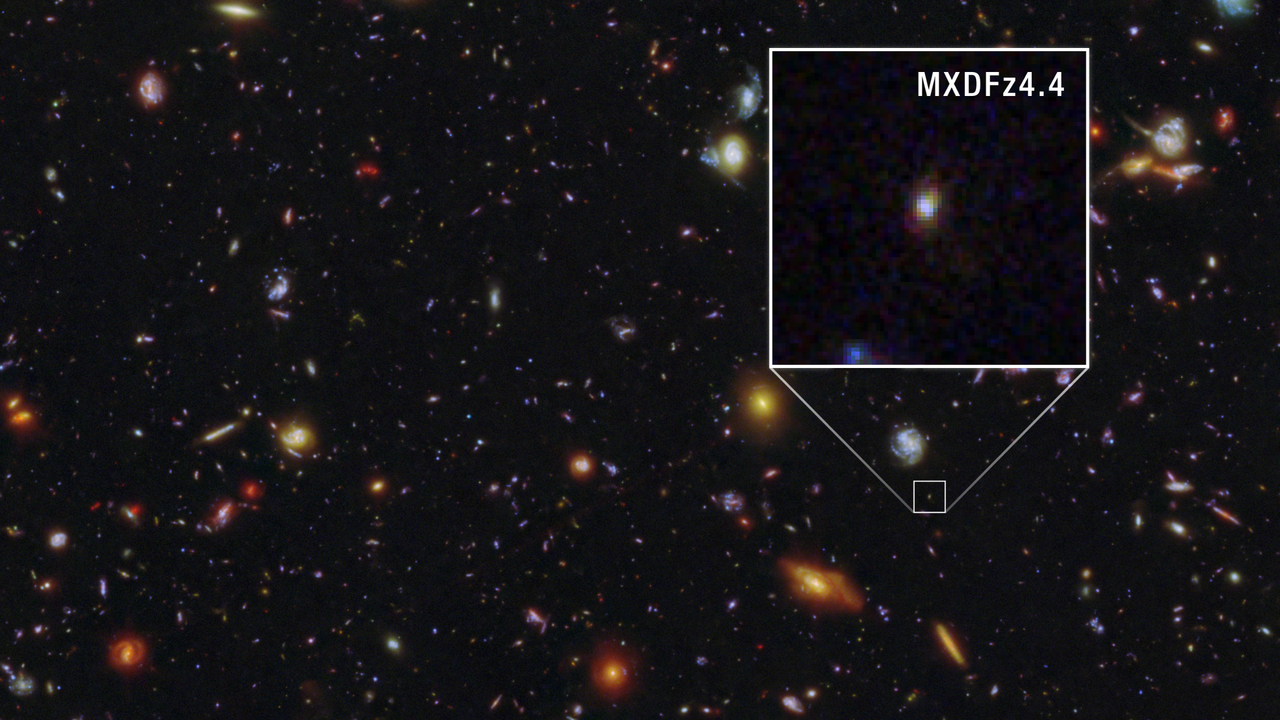
Astronomers using the Hubble Space Telescope have detected light from a distant galaxy, designated MXDFz4.4, which they describe as an 'impossible' discovery. This galaxy should not have been visible according to current cosmological models. The researchers believe this surprising finding could provide crucial insights into the period when the universe transitioned from an opaque state to transparency billions of years ago. Understanding this epoch is fundamental to comprehending the evolution of the cosmos. The detection of MXDFz4.4 challenges existing theories about early galaxy formation and visibility. Further study of this galaxy is expected to shed light on the physical processes that occurred during this critical phase of cosmic history. This discovery underscores the ongoing potential for unexpected observations to refine our understanding of the universe.
The detection of MXDFz4.4 by the Hubble telescope presents an intriguing anomaly that may necessitate refinements in our models of early cosmic evolution. The observation challenges prevailing theories regarding the visibility of galaxies in the universe's formative stages, potentially indicating either a more rapid formation of luminous structures or a different understanding of the intergalactic medium's opacity during that era. Future research will likely focus on corroborating this finding with other instruments and exploring theoretical frameworks that can accommodate such 'impossible' light sources. This discovery highlights the dynamic nature of scientific understanding, where observational data can prompt significant revisions to established paradigms, pushing the boundaries of our knowledge about the universe's transition to transparency.
AI-generated to prompt reflection — not editorial opinion, not advice, not a statement of fact. How this works.