Hubble Telescope Reveals Ancient Star Cluster Messier 3
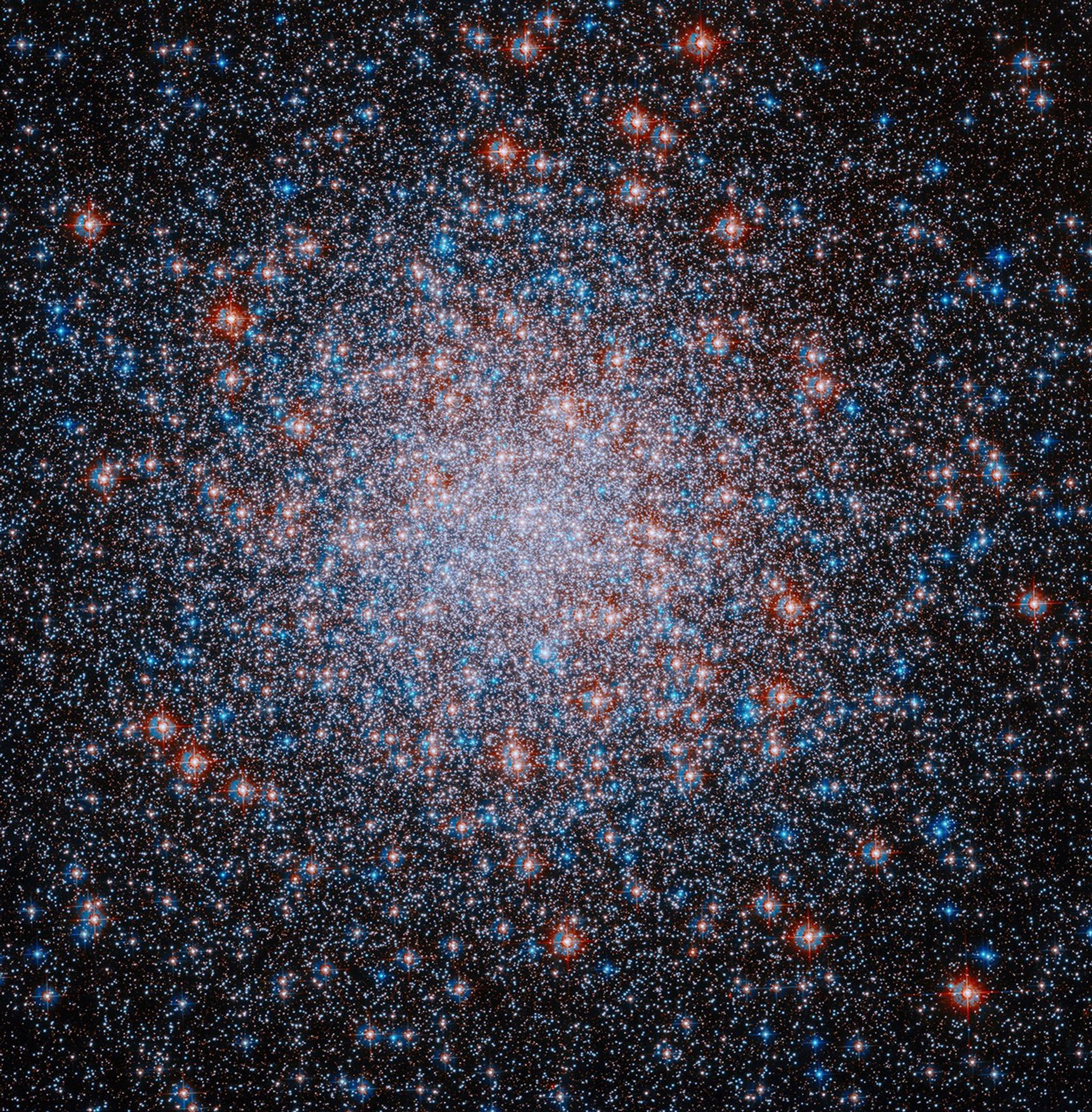
NASA's Hubble Space Telescope has captured a stunning image of Messier 3 (M3), a massive globular cluster within our Milky Way galaxy. Globular clusters are dense, spherical collections of stars held together by gravity. These celestial formations are composed of ancient stars that originated from the same gas cloud, resulting in them having similar ages. M3 is identified as one of the most substantial known globular clusters in the Milky Way. The image highlights the intricate structure and vast number of stars within this ancient stellar system. Globular clusters like M3 offer astronomers valuable insights into the early universe and stellar evolution. Studying these formations helps scientists understand the conditions under which stars and galaxies first formed. The Hubble Space Telescope continues to provide unprecedented views of cosmic phenomena, aiding in our understanding of the universe's history and composition. This particular observation of M3 showcases the telescope's remarkable capabilities in resolving distant and complex celestial objects.
The observation of Messier 3 by the Hubble Space Telescope provides a visual representation of ancient stellar populations, offering a window into the early stages of galactic formation. Analyzing such massive, ancient star clusters allows astronomers to test models of stellar evolution and galactic dynamics. The composition and age distribution of stars within M3 can serve as a benchmark for understanding the conditions prevalent in the Milky Way's formative period. Future advancements in observational technology will likely enable even more detailed studies of these objects, potentially refining our understanding of dark matter distribution and the chemical enrichment of galaxies over cosmic time.
AI-generated to prompt reflection — not editorial opinion, not advice, not a statement of fact. How this works.