Human Activities Threaten Deep-Sea Molluscs and Desert Frogs, Red List Shows
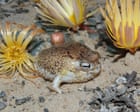
The latest Red List of endangered species highlights that ingenious survival strategies developed by life on Earth are increasingly unable to withstand destructive human activities. Newly identified species facing endangerment include desert frogs and molluscs inhabiting extreme ocean depths. Many snail, limpet, and clam species have adapted to survive crushing pressures and high temperatures, up to 450°C (842°F), on hydrothermal vents deep in the ocean. However, an assessment for the Red List found that approximately two-thirds of the hundreds of mollusc species exclusively found on these deep-sea vents are now at risk of extinction. This significant threat is primarily attributed to the expansion of deep-sea mining operations. The report underscores a growing disconnect between nature's adaptive capabilities and the escalating pace of human-induced environmental destruction.
The Red List's findings illustrate a critical tension between the long-term evolutionary adaptations of species and the rapid, often irreversible, impacts of human industrial activities. While species have evolved remarkable resilience to extreme natural conditions, these adaptations are proving insufficient against novel anthropogenic pressures like deep-sea mining. This situation prompts consideration of governance frameworks for emerging industries that proactively assess and mitigate ecological risks before widespread environmental damage occurs. The Red List serves as an indicator of potential systemic failures in balancing economic development with biodiversity conservation, suggesting a need for more robust international regulations and technological solutions that prioritize ecosystem integrity in the face of resource extraction.
AI-generated to prompt reflection — not editorial opinion, not advice, not a statement of fact. How this works.