Human Go Player Shin Jinseo Defeats Top AI Katago
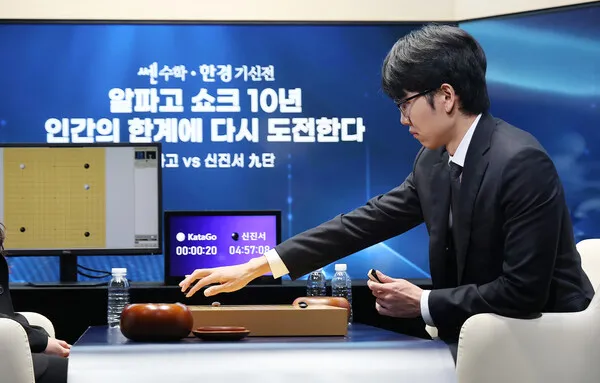
South Korean professional Go player Shin Jinseo has defeated Katago, a leading artificial intelligence program. The match was played under a 2-stone handicap, with Shin Jinseo winning by 4.5 points. This victory marks a significant achievement for human players against advanced AI in the complex game of Go. Katago is known for its strong performance and has been a formidable opponent for many top human players. The game was closely contested, highlighting Shin Jinseo's exceptional skill and strategic depth. This result is particularly noteworthy given the rapid advancements in AI capabilities in recent years. The 2-point handicap suggests Katago was given a significant advantage at the start of the game. Shin Jinseo's ability to overcome this handicap and secure a victory demonstrates his mastery of the game. The 4.5-point margin of victory indicates a decisive win, despite the initial handicap. This event is being closely watched by the Go community and AI researchers alike. It raises questions about the ongoing evolution of human versus AI competition in strategic games.
This match between human Go master Shin Jinseo and the AI Katago, played with a 2-stone handicap, demonstrates the evolving landscape of human-AI competition. While AI has achieved superhuman performance in many games, this result suggests that human intuition and strategic adaptability can still contend, especially when AI is not operating at its absolute peak or with specific handicaps. The 4.5-point victory margin, despite the handicap, highlights the complex interplay of AI's computational power and a human's nuanced understanding of game dynamics. This event prompts consideration of how AI development in complex strategy games might focus on specific task optimization rather than general intelligence, and how human players can leverage unique cognitive strengths. Future AI development may aim to better simulate human-like strategic foresight or adapt to novel game states, potentially shifting the balance in subsequent encounters.
AI-generated to prompt reflection — not editorial opinion, not advice, not a statement of fact. How this works.