Humanoid Robots Perform Live Surgery for the First Time
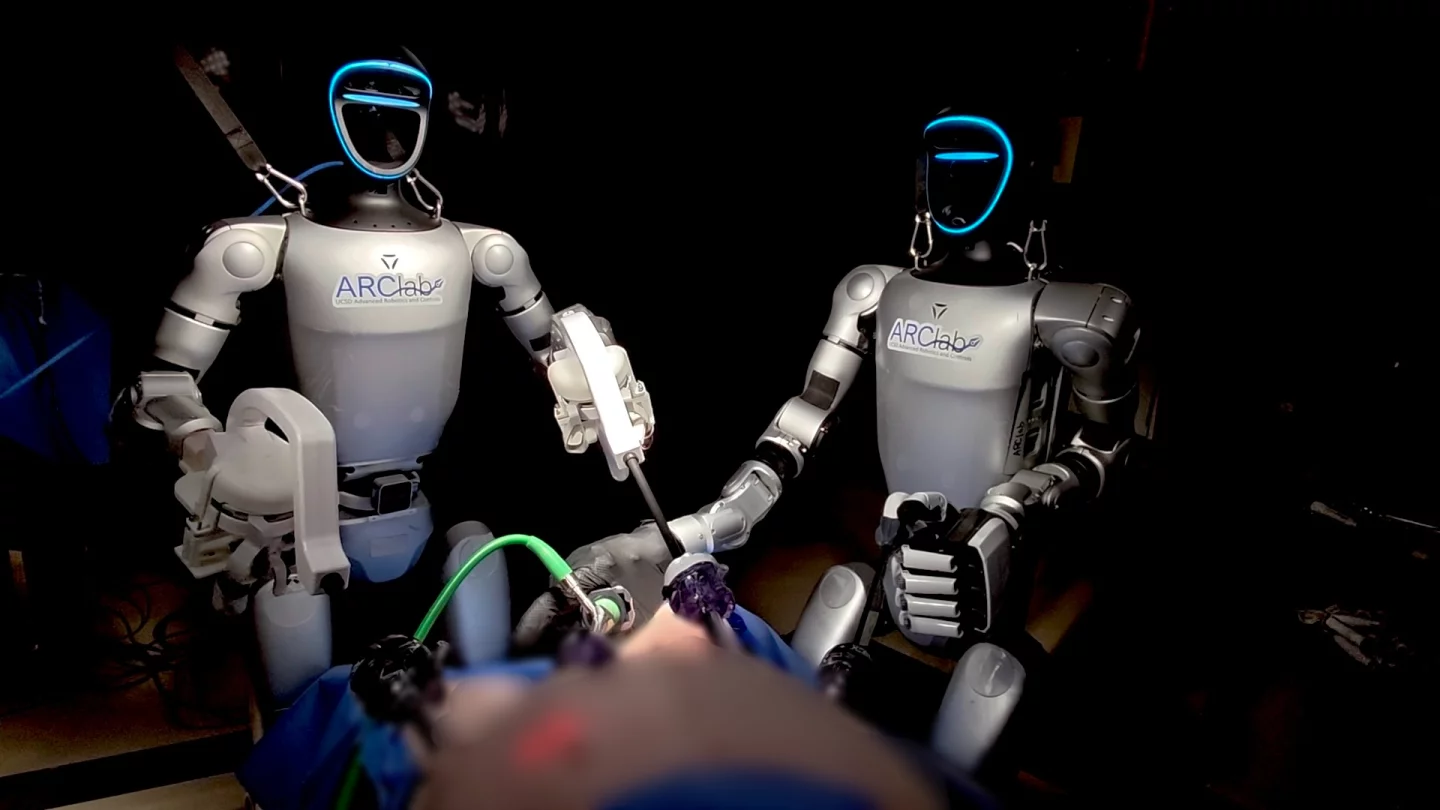
In a groundbreaking development, surgeons at UC San Diego have successfully guided two humanoid robots to perform live surgical procedures. This marks the first time in history that such robots have completed live surgeries, signifying a significant leap beyond the capabilities of current fixed robotic arms used in operating rooms. The achievement suggests a future where human surgeons and humanoid robots may collaborate directly in surgical settings. This advancement opens new possibilities for remote surgery and could potentially expand access to specialized surgical care.
This development represents a significant technological advancement in surgical robotics, moving from fixed instrumentation to more adaptable, teleoperated humanoid forms. The integration of humanoid robots into live surgery could enhance precision, enable remote surgical interventions, and potentially address surgeon shortages in certain areas. However, the ethical, regulatory, and safety frameworks for such advanced human-robot collaboration in critical medical procedures will require careful consideration and robust development over the next decade. The long-term impact on surgical training, patient outcomes, and the definition of medical expertise in an increasingly automated landscape warrants ongoing scrutiny.
AI-generated to prompt reflection — not editorial opinion, not advice, not a statement of fact. How this works.