Humayun Ahmed's Legacy: How His Writings Introduced a US University to Bangladesh
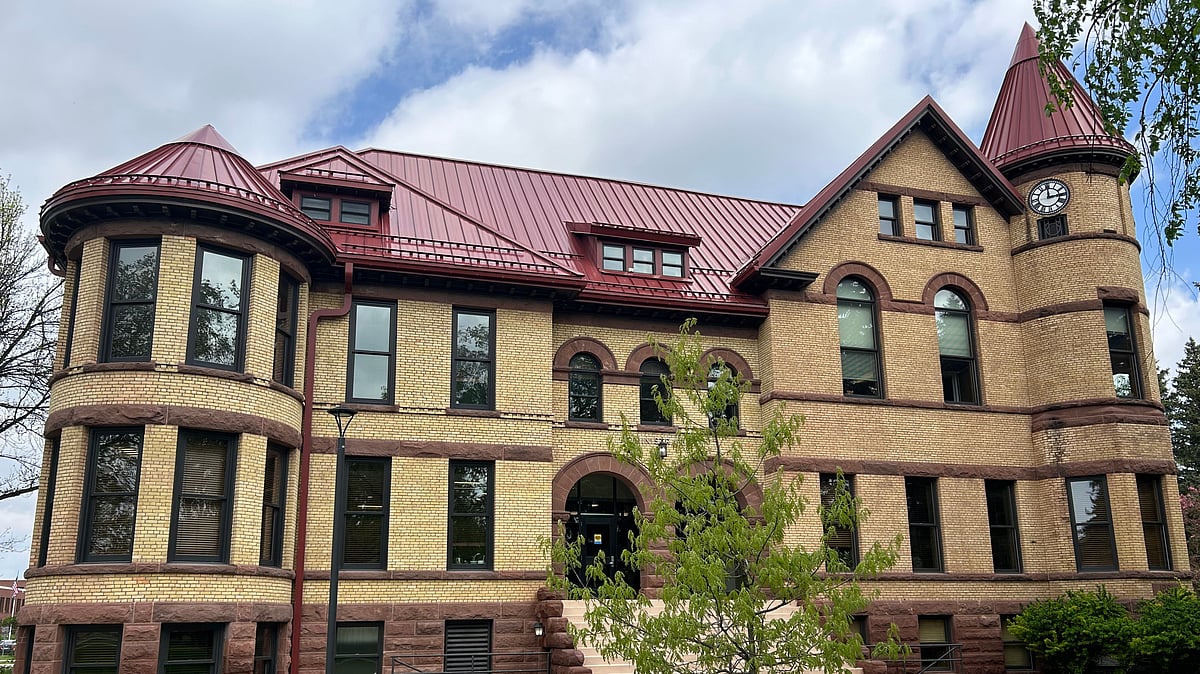
Bangladeshi PhD student Sumon Dey recounts how the acclaimed author Humayun Ahmed's writings created a vivid image of North Dakota State University (NDSU) in the minds of many Bangladeshis, even those unfamiliar with the institution. Ahmed pursued his PhD in Polymer Chemistry at NDSU, and his experiences there were documented in books like 'Hotel Graver Inn'. Dey felt a sense of familiarity with the campus upon arriving, a feeling that deepened in 2024 when a Bangladeshi doctor, Tarikul Islam, visited Fargo specifically to see the campus where Ahmed had studied. Dr. Islam's primary interest was Dunbar Hall, a building mentioned in Ahmed's 'Hotel Graver Inn' for its student life, particularly Room 529 where Ahmed experienced a Quantum Mechanics class. Despite their search, including asking locals, Dunbar Hall could not be found and had been demolished. The author and Dr. Islam explored the campus, passing landmarks like the bison statue and various halls, but Dr. Islam was seeking a more intangible connection to Ahmed's past. Ahmed's writings captured the essence of his expatriate life in Fargo, detailing loneliness, friendship, and everyday struggles with simple yet evocative prose that resonated deeply with Dey and Dr. Islam. They spoke with some NDSU chemistry professors who vaguely recalled Ahmed, and also sought his name on display boards at the university's Memorial Union, without success. Their search also led them to the site of the former Hotel Graver Inn, now an apartment complex. Dey later wrote about this experience for The Spectrum, the university's student publication, under the title 'The Story That Made NDSU Known in Bangladesh'.
This narrative highlights the profound impact of cultural dissemination through literature, illustrating how an author's personal experiences at an academic institution can foster a sense of connection and recognition for that institution in a distant country. The story demonstrates the power of narrative to transcend geographical boundaries, creating a legacy for both the author and the place that shaped him. It also touches upon the ephemeral nature of physical spaces versus the enduring power of memory and written accounts. The search for specific locations like Dunbar Hall underscores the challenges of reconciling historical narratives with present-day realities, where physical structures may disappear but the stories associated with them persist through dedicated individuals and their efforts to preserve cultural memory. This phenomenon suggests a broader trend where digital and literary footprints can become as significant as physical presence in shaping global perceptions and fostering cross-cultural understanding.
AI-generated to prompt reflection — not editorial opinion, not advice, not a statement of fact. How this works.