Humpback Whales' Annual Migration: Why Rio de Janeiro's Coast is a Key Stopover
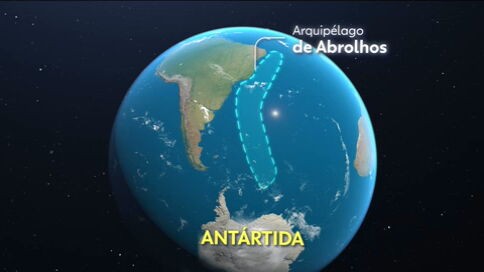
Every year, as winter arrives, humpback whales make a regular appearance along the coast of Rio de Janeiro, offering a spectacular natural display. These increasingly frequent sightings are a significant draw for whale-watching tourism and capture the attention of those navigating the Guanabara Bay and the adjacent ocean. The whales undertake one of the planet's most extensive migrations, traveling up to 9,000 kilometers from the frigid waters of Antarctica. Their journey takes them along the Brazilian coast towards the Abrolhos Archipelago in southern Bahia, a region offering ideal conditions for mating and calving. While Rio de Janeiro's coastline is not their final destination, it serves as a crucial migratory corridor for thousands of these marine giants annually. These whales, which can reach up to 16 meters in length and weigh approximately 40 tons, are not migrating for food but to reach warmer tropical waters for reproduction. The young are born and spend their initial months in Brazilian waters before the return voyage to Antarctica. Rio's strategic position allows for observation without disrupting the whales' migratory path. The growing presence of humpback whales along the Brazilian coast also signifies the species' recovery after facing near-extinction due to commercial whaling in the 20th century. The prohibition of whaling in Brazil in the 1980s has been instrumental in the population's resurgence, with an estimated over 30,000 humpback whales now crossing the Brazilian coast annually, making them a prime example of successful marine conservation. Despite significant advancements in understanding these animals, the precise mechanism by which they navigate the same routes year after year remains an enduring mystery in marine biology, with hypotheses including ocean currents, Earth's magnetic field, or celestial positioning, none yet definitively proven.
The annual migration of humpback whales along Brazil's coast, particularly through Rio de Janeiro, highlights the success of conservation efforts following near-extinction. This phenomenon underscores the resilience of marine ecosystems when human-induced pressures, such as commercial whaling, are removed. The consistent return of these animals to specific breeding grounds, despite the navigational mystery, suggests a deep-seated biological imperative tied to environmental cues. Future considerations should focus on ensuring these migratory corridors remain protected from increasing maritime traffic and potential habitat degradation, balancing ecotourism benefits with the imperative of species preservation. The ongoing scientific quest to understand their navigation could yield insights applicable to other migratory species and even biomimetic technologies.
AI-generated to prompt reflection — not editorial opinion, not advice, not a statement of fact. How this works.