Humpback Whales' Secret Seafloor Hunting Tactic Revealed
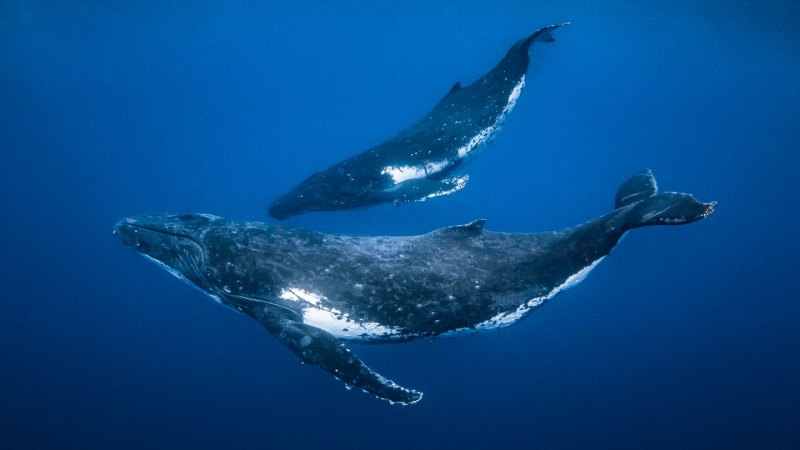
Scientists have documented a previously unseen hunting strategy employed by humpback whales. The whales were observed coordinating their movements at the seafloor to capture sand lances. This behavior involves a sophisticated level of cooperation and timing among the marine mammals. The discovery sheds new light on the complex social dynamics and foraging techniques of these large cetaceans. Previously, such coordinated seafloor hunting by humpbacks had remained largely undocumented. Researchers captured footage of multiple whales working together, indicating a learned or inherited behavior passed down through generations. The specific mechanics of their coordination involve arriving at the seabed simultaneously to trap schools of fish. This finding challenges existing assumptions about humpback whale feeding habits and highlights the ongoing potential for new discoveries in marine biology. Further research is expected to explore the prevalence and evolution of this unique hunting method.
This observation of coordinated seafloor hunting by humpback whales offers a fascinating glimpse into the adaptability and complexity of marine mammal behavior. The revelation of this previously undocumented strategy suggests that our understanding of cetacean foraging may still be incomplete. Analyzing the incentive structures driving such cooperation could reveal insights into social learning and the transmission of knowledge within whale populations. Future research might explore how environmental factors, such as prey distribution and seafloor topography, influence the development and effectiveness of this hunting tactic. Understanding these dynamics is crucial for appreciating the ecological roles these animals play and for developing effective conservation strategies in the face of evolving marine ecosystems.
AI-generated to prompt reflection — not editorial opinion, not advice, not a statement of fact. How this works.