Hundreds of Hidden Structures Discovered Beneath the Amazon
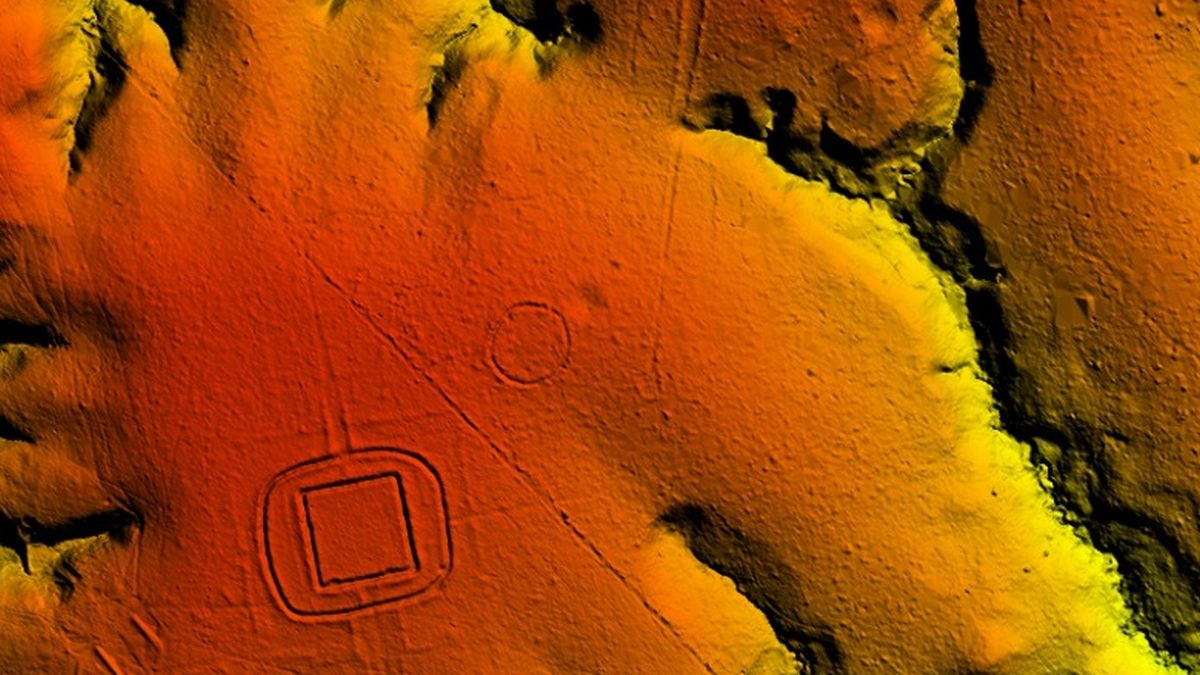
An international team of scientists has uncovered hundreds of previously unknown ancient structures buried beneath the Amazon rainforest. These findings suggest a much larger and more complex pre-Columbian society than previously understood. The structures, which include earthworks, causeways, and settlements, indicate a sophisticated level of organization and a significant population density in the region centuries ago. Researchers utilized advanced remote sensing technology, including LiDAR, to penetrate the dense forest canopy and map the subterranean landscape. This technology allowed for the identification of geometric patterns and human-made modifications to the terrain that would have been impossible to detect from the ground. The discovery challenges long-held assumptions about the Amazon's ecological limits and its capacity to support large human populations. It implies that indigenous peoples actively shaped and managed the rainforest environment, rather than merely existing within it. The implications of this research are far-reaching, prompting a re-evaluation of Amazonian history and the scale of human impact on the ecosystem over millennia. Further excavation and analysis are planned to understand the purpose and timeline of these remarkable hidden settlements.
The discovery of extensive ancient structures beneath the Amazon rainforest fundamentally reshapes our understanding of pre-Columbian societies and their environmental interactions. This finding highlights the limitations of surface-level observation in historical research and underscores the power of advanced technologies like LiDAR in revealing hidden human legacies. It suggests that historical narratives about the Amazon have been incomplete, potentially underestimating the scale of human ingenuity and societal development in the region. This prompts a re-examination of the relationship between human civilization and complex ecosystems, challenging the notion of pristine wilderness and emphasizing the long-term, transformative impact of human activity. Future research will likely focus on reconciling these new archaeological findings with existing ecological and historical models, potentially leading to a more integrated view of the Amazon's past.
AI-generated to prompt reflection — not editorial opinion, not advice, not a statement of fact. How this works.