Hungarian Academy of Arts Honors Controversial Figure
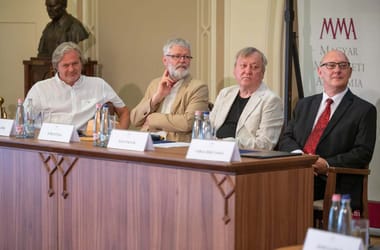
The Hungarian Academy of Arts (MMA) has honored Tamás Varga-Bíró, a former contributor to the Holocaust-denying section of the kuruc.info website. The praise for Varga-Bíró was delivered by Gábor Koncz, who was elected as a corresponding member of the MMA. The MMA's decision to recognize Varga-Bíró has drawn attention due to his past association with a platform known for Holocaust denial. This event highlights a significant controversy within the Hungarian cultural and artistic sphere. The MMA, as a state-funded institution, is expected to uphold certain standards of public discourse and historical accuracy. The selection of Varga-Bíró for this honor raises questions about the vetting process and the values promoted by the academy. The situation underscores the ongoing challenges in navigating historical memory and public representation in Hungary. The MMA's actions could have implications for its reputation and its relationship with the broader public and international cultural bodies. Further scrutiny of the academy's membership criteria and decision-making processes may be warranted.
The Hungarian Academy of Arts' decision to honor Tamás Varga-Bíró, a former contributor to a Holocaust-denying publication, presents a complex case of institutional recognition. This action may reflect internal cultural currents or a broader societal debate about historical narratives and freedom of expression within Hungary. From a systemic perspective, state-funded cultural institutions often face the challenge of balancing artistic freedom with public accountability and the potential for reputational damage. The MMA's choice invites consideration of how such bodies navigate historical sensitivities and the implications of associating with individuals whose past statements contradict widely accepted historical facts. This situation prompts reflection on the criteria for cultural honor and the potential for such decisions to influence public perception and historical understanding over the next decade, particularly in an era increasingly focused on truth and reconciliation.
AI-generated to prompt reflection — not editorial opinion, not advice, not a statement of fact. How this works.