Hungarian Parliament Votes to Remove President Sulyok, Orbán Ally
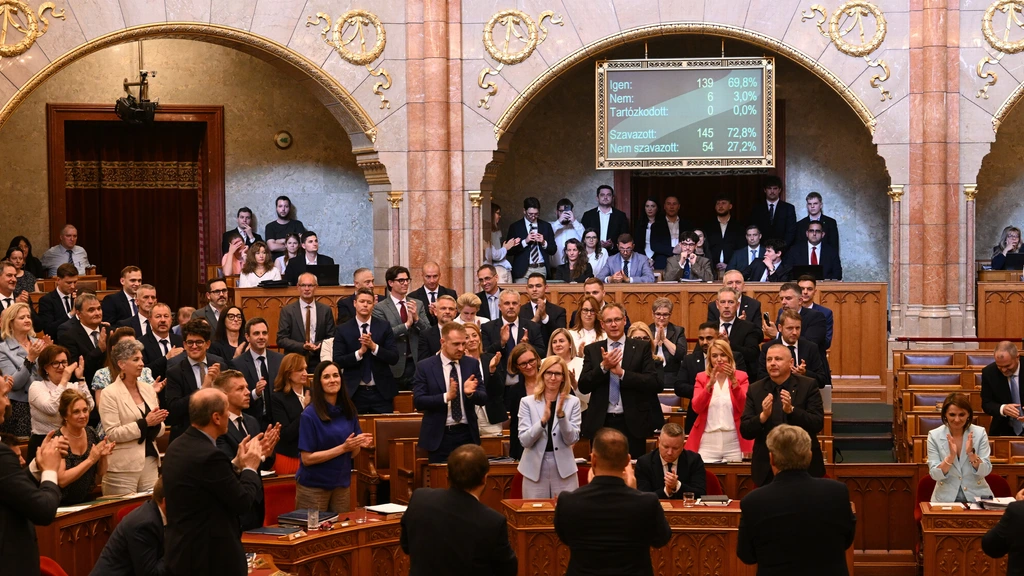
The Hungarian parliament has approved a constitutional amendment enabling the removal of President Sulyok, with 139 votes in favor and 6 against. The party of former Prime Minister Orbán boycotted the vote. Prime Minister Magyar aims to reduce Orbán's influence by ousting Sulyok, whom he considers a "puppet" of the previous administration. Magyar had demanded the departure of officials appointed by Orbán shortly after his election victory in April, citing their perceived subservience. Magyar deemed Sulyok unfit for office and requested his resignation, stating the president's role is to symbolize national unity and oversee democratic state functions, which Sulyok allegedly failed to do. Sulyok refused to step down, prompting Magyar to set a June 1 deadline, which passed without Sulyok complying. Magyar then announced plans to amend the constitution within a month to facilitate the president's removal. Magyar's Tisza party, holding a two-thirds majority, can enact constitutional changes. Orbán's Fidesz party denounced the bill as an "unprecedented attack" on Hungary's democratic order. President Sulyok must sign the amendment within five days for it to take effect; his decision remains unannounced. Magyar has indicated he will initiate impeachment proceedings if Sulyok does not sign. While the Hungarian presidency is largely ceremonial, the president can veto legislation but cannot block constitutional amendments. The amendment also includes judicial reforms, the establishment of an office to investigate financial misconduct during the Orbán government, and a twelve-year term limit for parliamentarians. Since taking office, Magyar has reversed several predecessor decisions and replaced state broadcaster leadership, with the main television channel recently apologizing for its role under Orbán.
This constitutional amendment signifies a significant shift in Hungarian political power dynamics, reflecting the new government's strategy to dismantle the institutional legacy of the previous administration. By targeting the presidency, a role often symbolic but with veto powers, Prime Minister Magyar's administration is asserting its authority and signaling a move towards greater executive control. The stated intent to investigate past financial misconduct and reform the judiciary suggests a broader agenda of accountability and institutional restructuring. However, the move also raises questions about the consolidation of power and the potential for future political instability, particularly given the opposition's characterization of the action as an attack on democracy. The long-term implications will depend on how these reforms are implemented and whether they foster genuine checks and balances or further concentrate power, shaping Hungary's governance trajectory in the coming decade.
AI-generated to prompt reflection — not editorial opinion, not advice, not a statement of fact. How this works.