Hungarian President Tamas Sulyok Signs Law Forcing His Own Immediate Resignation
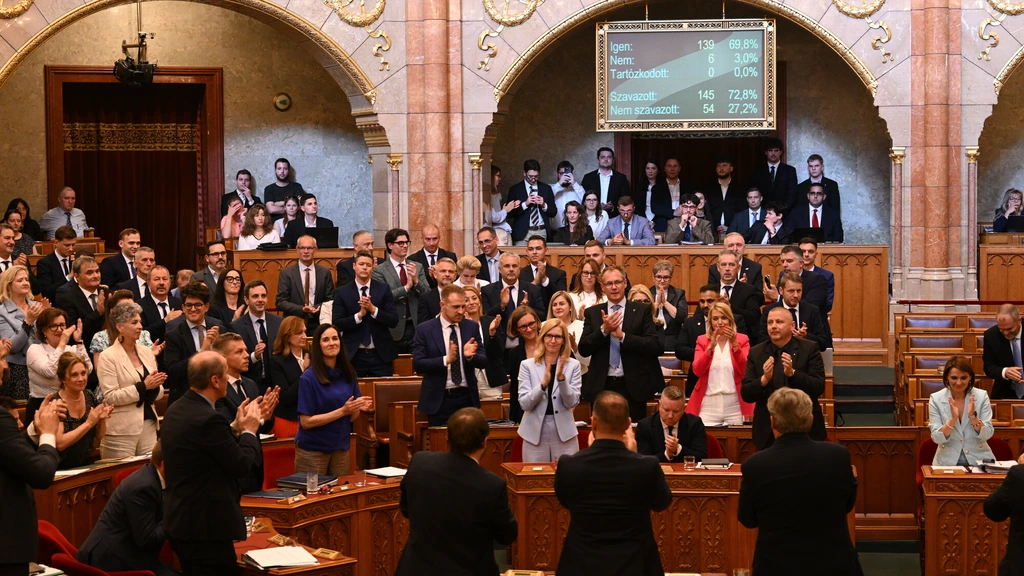
Hungarian President Tamas Sulyok has signed a constitutional amendment that effectively ends his tenure as head of state, a move he announced himself. This resignation is a direct result of Prime Minister Peter Magyar's electoral promise to liberate Hungary from the influence of former Prime Minister Viktor Orbán, whom Magyar decisively defeated in recent elections. The shift in political power, with Orbán and his Fidesz party losing their majority, consequently removed support for Sulyok, who was elected by parliament in 2024 when Fidesz held a significant majority. Magyar stated that this action restores the principle that power can be limited and public resources recovered, allowing the state to serve its citizens freely. Parliament approved the constitutional amendment on Monday, after Sulyok had initially refused to step down. He was compelled to sign the law by a deadline, facing removal by parliament if he refused. Sulyok, a former Constitutional Court judge, warned that the reform undermines the rule of law by dismissing officeholders in this manner. Former Prime Minister Orbán criticized the amendment, declaring that "tyranny is no longer a threat, but a reality" and that "if this can happen to the president, no one is safe tomorrow." Parliament Speaker Agnes Forsthoffer will serve as interim president starting Monday. Parliament is expected to elect a new president soon, to serve until a new constitution is established. The amendment also introduces a twelve-year term limit for members of parliament and sets the retirement age for Constitutional Court judges at 70, necessitating the retirement of the court's current president, an Orbán ally.
The recent constitutional amendment in Hungary, compelling President Tamas Sulyok's resignation, illustrates a significant power transition and a potential recalibration of institutional checks and balances. The stated objective of limiting power and recovering public resources, while framed as a democratic restoration, introduces a precedent for executive-driven dismissals of constitutional officeholders. This mechanism, though presented as a response to perceived past overreach, could establish a pattern where future governing majorities leverage constitutional changes to reshape the judiciary and executive appointments based on political alignment rather than solely on merit or tenure. The long-term implications for judicial independence and the stability of democratic institutions warrant careful observation, particularly in light of the precedent set for removing officials who do not comply with the governing party's directives. This event highlights the ongoing tension between majority rule and the protection of institutional autonomy in contemporary European democracies.
AI-generated to prompt reflection — not editorial opinion, not advice, not a statement of fact. How this works.