Hungarian Researchers Develop AI System to Monitor Premature Babies
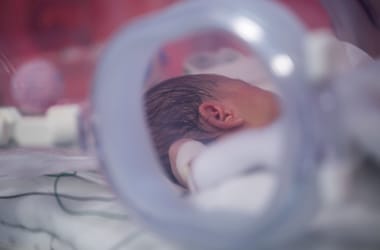
Researchers from HUN-REN SZTAKI and Semmelweis University in Hungary are developing an AI-based camera system designed to continuously monitor the posture and movements of premature infants in incubators. This innovative system aims to provide a non-invasive method of observation, eliminating the need for wires and physical sensors attached to the babies. The technology will allow for constant surveillance of the infants' physical state without disturbing them. This advancement could significantly improve the care and safety of vulnerable newborns in neonatal intensive care units. The project focuses on leveraging artificial intelligence to enhance the monitoring capabilities available to medical professionals.
This development represents a potential paradigm shift in neonatal care, moving towards proactive, data-driven monitoring. By utilizing AI for continuous, non-contact observation, healthcare providers may gain earlier insights into infant distress or developmental anomalies, potentially reducing the incidence of complications. The system's reliance on visual data and AI processing highlights the increasing integration of advanced technologies in sensitive healthcare environments. Future considerations will likely involve rigorous validation of the AI's accuracy and reliability, alongside ethical frameworks for data privacy and algorithmic bias, ensuring that technological advancement serves to augment, rather than replace, human clinical judgment and compassionate care.
AI-generated to prompt reflection — not editorial opinion, not advice, not a statement of fact. How this works.