Hungary's BYD Investments Face Scrutiny Amid Political Shifts
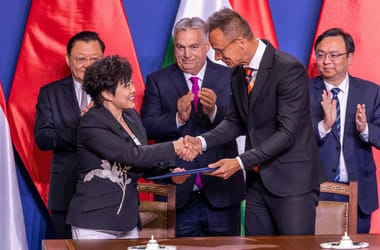
The Hungarian state has provided substantial financial support, amounting to tens of billions of forints, to Chinese electric vehicle manufacturer BYD for its investments in Szeged, Budapest, Komárom, and Fót. This state funding occurred during Péter Szijjártó's tenure as minister. However, the recent appointment of Szijjártó may complicate BYD's efforts to foster positive relations with the new government led by Péter Magyar. The Chinese automaker had been actively seeking to build stronger ties with Hungarian authorities in recent months. This political development introduces uncertainty regarding the future of BYD's operations and its relationship with the Hungarian state, potentially impacting ongoing and future projects. The significant public funds allocated raise questions about accountability and the long-term implications of such investments in light of evolving political landscapes.
The significant state funding directed towards BYD's Hungarian ventures, particularly during Péter Szijjártó's ministerial period, highlights a pattern of state-backed industrial development. The potential for political shifts to influence the cultivation of relationships with foreign investors like BYD underscores the inherent volatility in geopolitical investment strategies. Future governments may reassess or renegotiate terms of such agreements, particularly those involving substantial public funds, to align with their own policy objectives and national interests. This situation prompts consideration of how to structure international investments to ensure long-term stability and mutual benefit, irrespective of domestic political transitions, and whether current governance frameworks adequately safeguard public resources against such fluctuations.
AI-generated to prompt reflection — not editorial opinion, not advice, not a statement of fact. How this works.