Hungary's First Robotic Arrhythmia Treatment System Launched in Szeged
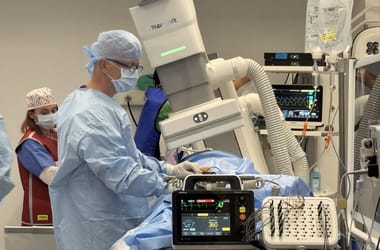
The University of Szeged's clinic has inaugurated Hungary's first robotic system for treating heart rhythm disorders. This advanced stereotactic robotic system promises more precise and safer interventions for patients compared to traditional methods. The new technology aims to enhance the accuracy and safety of cardiac procedures, potentially leading to better patient outcomes. Its deployment at the University of Szeged marks a significant advancement in cardiovascular care within Hungary. The system's capabilities are expected to reduce risks associated with arrhythmia treatments. This initiative underscores Hungary's commitment to adopting cutting-edge medical technologies. Patients undergoing treatment at the clinic will benefit from this state-of-the-art robotic assistance. The introduction of this system positions the University of Szeged as a leader in interventional cardiology in the region. Further details on the specific types of arrhythmias treatable by the robot are anticipated.
The introduction of a robotic system for arrhythmia treatment in Hungary signifies a move towards precision medicine and enhanced patient safety in cardiovascular interventions. This technological adoption reflects a global trend in healthcare, where automation and robotics are increasingly leveraged to improve procedural accuracy and minimize invasiveness. From a systems perspective, the integration of such advanced technology necessitates robust training protocols for medical staff and rigorous maintenance schedules to ensure optimal performance and patient outcomes. The long-term impact will depend on its cost-effectiveness, accessibility across different healthcare settings, and its ability to handle a wide spectrum of cardiac arrhythmias, thereby influencing future healthcare infrastructure investments and the development of specialized medical expertise in Hungary.
AI-generated to prompt reflection — not editorial opinion, not advice, not a statement of fact. How this works.