Hungary's Image Shifts After Orbán's Setbacks, According to Bloomberg
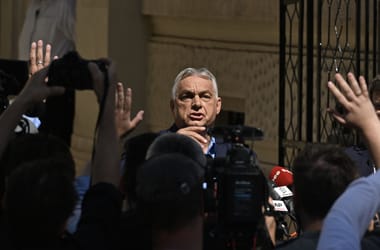
Hungary's international perception is undergoing a significant shift following recent political developments concerning Prime Minister Viktor Orbán. Budapest is reportedly executing a geopolitical pivot, a move that coincides with investigations into Chinese investors who were favored during the Orbán era. Concurrently, Péter Szijjártó, the Hungarian Minister of Foreign Affairs and Trade, is set to become a lobbyist for BYD, a Chinese electric vehicle manufacturer. This period of transition in Hungary unfolds against a backdrop of broader geopolitical realignments. Russia's system under Putin is becoming increasingly entrenched in its ongoing conflict. In the United States, Donald Trump is preparing for the November elections with plans for tariffs and revisions to electoral rules. Meanwhile, in Poland, Jarosław Kaczyński's political legacy appears to be fragmenting. This overview reflects a period of considerable flux in Central and Eastern European politics and international relations.
The geopolitical repositioning described suggests a strategic adaptation by Hungary in response to evolving international dynamics and domestic pressures. Investigations into favored investors may indicate a recalibration of economic partnerships, potentially driven by concerns over transparency or shifting global trade patterns. Minister Szijjártó's future role with BYD highlights the intricate interplay between national interests, foreign investment, and political influence. The broader regional context, including Russia's deepening involvement in conflict, potential U.S. policy shifts under a Trump administration, and political realignments in Poland, underscores the complex and interconnected nature of the current geopolitical landscape. These developments prompt consideration of how nations navigate shifting alliances and economic dependencies in an era of increasing global uncertainty and technological transformation.
AI-generated to prompt reflection — not editorial opinion, not advice, not a statement of fact. How this works.