Hyacinth Macaw Reverts to Endangered List Due to Habitat Loss and Fires
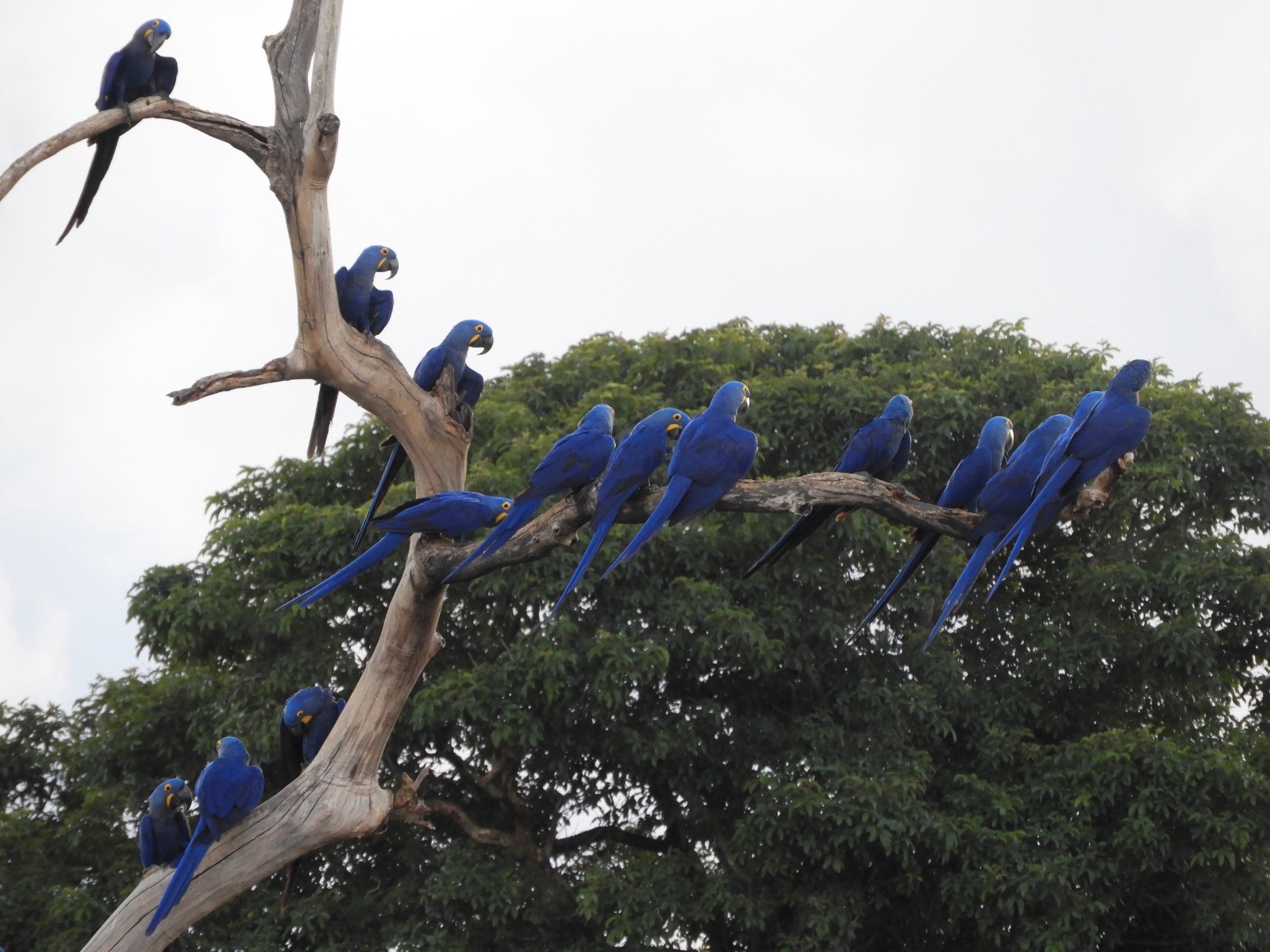
The hyacinth macaw (Anodorhynchus hyacinthinus), once removed from Brazil's national endangered species list, has been reclassified as Vulnerable by the Ministry of Environment and Climate Change. This reclassification, announced in June, is primarily attributed to the severe impacts of large-scale fires in the Pantanal region. Biologist Neiva Guedes, president of the Arara Azul Institute, reported a significant reduction in the monitored macaw population, habitat alterations, and decreased reproductive success following the extensive wildfires. One monitored group, observed for over two decades, saw a 60% decline in individuals at a traditional roosting site. The decision to reclassify the species was based on a combination of factors, including population decline, habitat degradation, and the direct effects of fires on reproduction. The hyacinth macaw's specialized diet and nesting requirements, relying on specific plants and trees, make it particularly susceptible to environmental changes like fires, which destroy essential food sources and nesting sites. Although conservation efforts since 1990, including artificial nest installations and habitat management, were crucial in its previous delisting in 2014, these gains are now threatened. The species takes seven to nine years to reach reproductive maturity, slowing recovery from extreme events. The reclassification aims to increase attention from authorities, researchers, and the public, prioritizing measures such as enhanced fire prevention, habitat protection, combating illegal wildlife trade, and reducing pesticide impacts. Despite other concerns like habitat loss and trafficking, fires remain the paramount threat, with climate predictions for El Niño suggesting a potentially worsening situation.
The reclassification of the hyacinth macaw to Vulnerable status underscores the fragility of specialized species within complex ecosystems like the Pantanal. While direct impacts from wildfires are evident, the underlying vulnerability stems from habitat specialization and the increasing frequency and intensity of extreme weather events, potentially exacerbated by climate change. Conservation successes, though significant, highlight the ongoing challenge of maintaining biodiversity in the face of systemic environmental pressures. Future strategies must integrate robust fire management with broader landscape-level conservation that addresses habitat connectivity and resilience, recognizing that species recovery is a long-term endeavor requiring sustained, adaptive interventions beyond immediate crisis response. The situation prompts consideration of how ecosystem services, vital for both wildlife and human populations, are protected through integrated environmental policy and sustainable land-use practices.
AI-generated to prompt reflection — not editorial opinion, not advice, not a statement of fact. How this works.