Hyundai's Atlas Robot Raises Questions About Self-Dealing and Chung Euisun's Boston Dynamics Stake
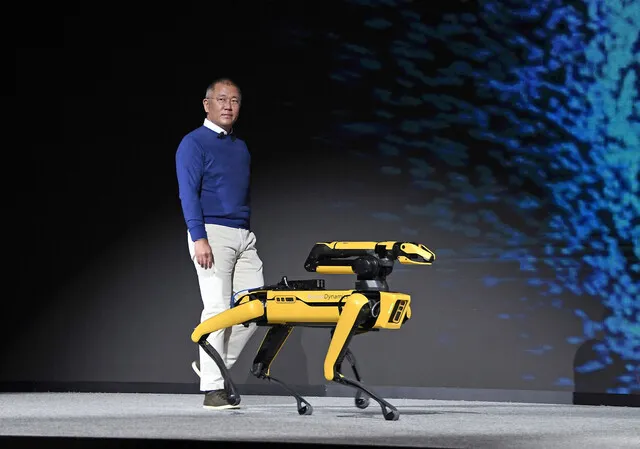
The unveiling of Hyundai's advanced humanoid robot, Atlas, has brought renewed scrutiny to allegations of self-dealing within the Hyundai conglomerate. Specifically, the situation is testing the integrity of Chung Euisun's significant stake in Boston Dynamics, a subsidiary acquired by Hyundai. Critics are raising concerns that the development and potential commercialization of technologies like Atlas, which heavily leverage Boston Dynamics' expertise, might disproportionately benefit certain individuals or affiliated entities within the group. This situation puts Chung Euisun, the chairman of Hyundai Motor Group, in a difficult position as he faces questions about the transparency and fairness of internal transactions. The focus is on whether the value generated from these advanced robotics projects is being distributed equitably among stakeholders or if there are instances of private gain at the expense of the larger corporate structure. The public debut of Atlas, a testament to sophisticated engineering, has inadvertently highlighted these underlying governance issues. The company's response and any potential restructuring or clarification regarding ownership and profit distribution will be closely watched. This situation could set a precedent for how such complex technological advancements are managed and overseen within large, diversified conglomerates like Hyundai.
The introduction of advanced robotics like Atlas, while a significant technological achievement, intersects with corporate governance challenges. The scrutiny over Chung Euisun's Boston Dynamics stake suggests a potential tension between fostering innovation and ensuring equitable distribution of value within the Hyundai group. Such situations often arise in large conglomerates where inter-company transactions and intellectual property rights can create complex incentive structures. Moving forward, clear governance frameworks and transparent reporting mechanisms will be crucial to mitigate risks of perceived or actual self-dealing. This event underscores the increasing importance of robust oversight in the age of rapid technological advancement, particularly as AI and robotics become more integrated into core business strategies. The next decade will likely see a greater emphasis on aligning corporate structures with the ethical and transparent management of groundbreaking technologies.
AI-generated to prompt reflection — not editorial opinion, not advice, not a statement of fact. How this works.