IBM's New Chip Technology Stacks Upward to Extend Moore's Law
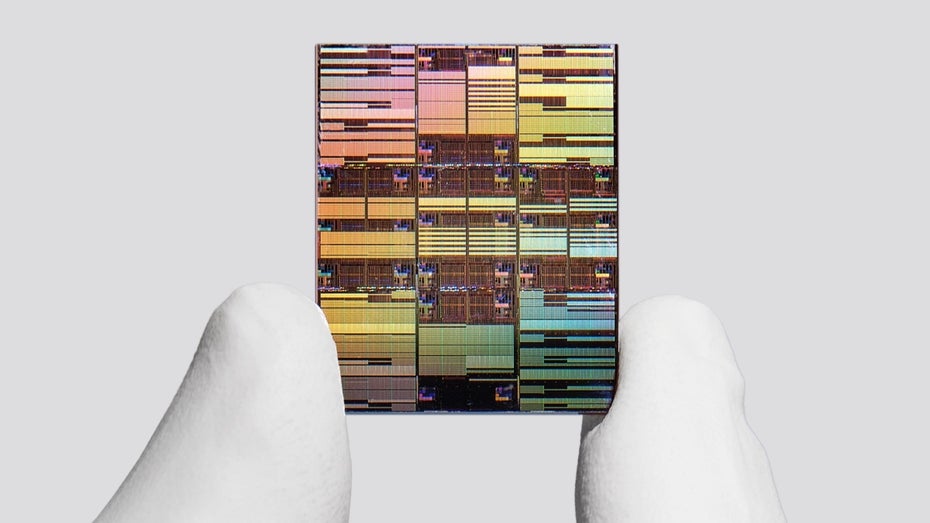
IBM is collaborating with other companies on a novel approach to increase transistor density on computer chips. Instead of shrinking transistors further, the strategy involves stacking them vertically. This innovative "vertical" approach aims to overcome the physical limitations of current chip manufacturing processes. The goal is to continue the trend of increasing computing power and efficiency, often referred to as Moore's Law. This development signifies a potential paradigm shift in semiconductor design and production. By building upwards, IBM and its partners hope to enable smaller, more powerful, and more energy-efficient electronic devices in the future. The exact timeline and specific partners involved beyond IBM were not detailed in the provided information, but the focus on vertical integration marks a significant departure from traditional horizontal scaling.
The pursuit of vertical transistor stacking by IBM and its partners represents a strategic response to the physical scaling limits of Moore's Law. This technological pivot from horizontal miniaturization to vertical integration addresses the escalating costs and diminishing returns associated with shrinking transistors. By exploring three-dimensional architectures, the industry seeks to maintain the historical trajectory of increased computational density and performance. This approach may unlock new avenues for innovation in microelectronics, potentially leading to more powerful and energy-efficient devices. However, the complexity of manufacturing and thermal management in vertically stacked chips presents significant engineering challenges that will require substantial investment and further research and development over the next decade.
AI-generated to prompt reflection — not editorial opinion, not advice, not a statement of fact. How this works.