ICC Bangladesh Urges India to Boost Economic Cooperation
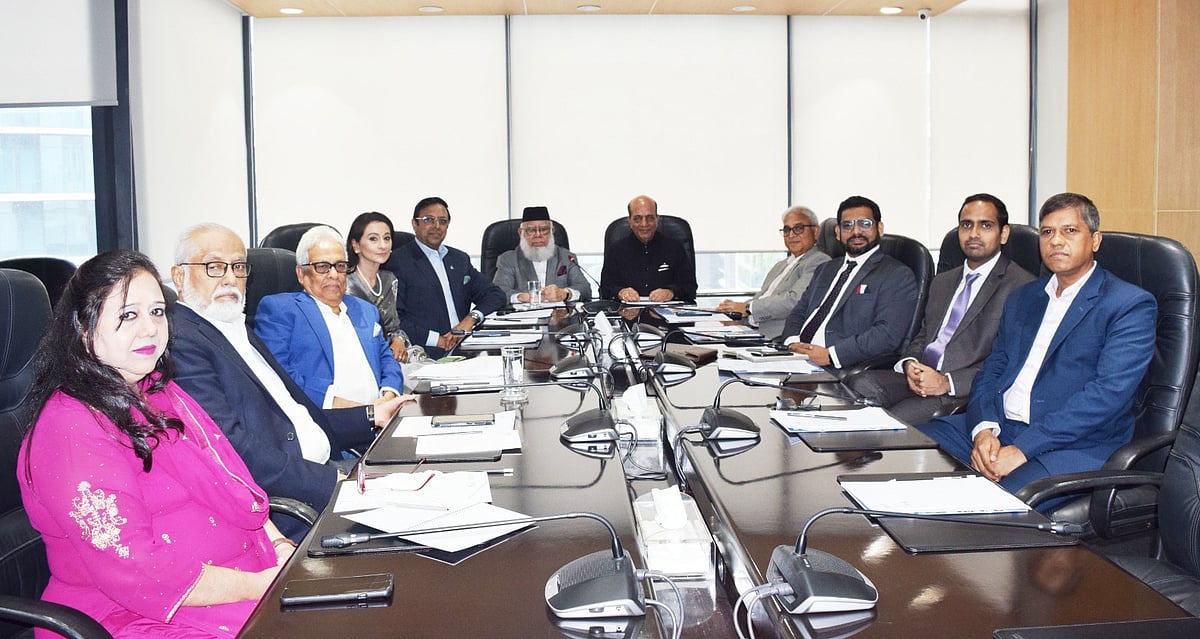
The International Chamber of Commerce Bangladesh (ICC Bangladesh) met with the Indian High Commissioner to Bangladesh, Dinesh Kumar, on Monday at the ICC Bangladesh secretariat in Dhaka. The meeting focused on strengthening bilateral trade, investment, and regional economic cooperation between the two nations. Discussions also encompassed various other economic collaboration issues.
Attendees included ICC Bangladesh President Mahbubur Rahman, Vice President Nasir Ejaz Bijoy, Executive Board members Tapan Chowdhury, Simin Rahman, and Abdul Hai Sarker, along with Secretary General Ataur Rahman, General Manager Ajay Bihari Saha, and Deputy General Manager Syeda Shahnewaz Lotika. Representing India were Deputy High Commissioner Pawan Kumar Badhe and Second Secretary (Economic & Commercial) Gaurav Kumar Agarwal.
Indian High Commissioner Dinesh Kumar highlighted the potential for both Bangladesh and India to become significant global economic hubs. He proposed joint industrial ventures in border areas, increased private sector involvement, and encouraged businesses to contact the Indian High Commission for any trade or investment-related issues. ICC Bangladesh President Mahbubur Rahman emphasized the need for active private sector participation to further enhance the growing economic partnership. He noted that bilateral trade in goods between the two countries reached approximately $11.39 billion in the fiscal year 2024-25, with Bangladesh exporting $1.76 billion and importing $9.62 billion worth of goods from India. Rahman urged for easier market access for Bangladeshi products in India, removal of non-tariff barriers, harmonization of product standards, simplified customs procedures, and the swift finalization of a Comprehensive Economic Partnership Agreement (CEPA). He also called for the activation of SAARC, implementation of the BBIN Motor Vehicles Agreement, increased BIMSTEC cooperation, and resolution of anti-dumping issues on Bangladeshi products, particularly jute and jute-based goods.
The meeting also covered cooperation in investment, regional value chains, multimodal connectivity, renewable energy, cross-border electricity trade, digital trade, fintech, artificial intelligence (AI), climate finance, sustainable industrialization, healthcare, education, and skill development.
The meeting between ICC Bangladesh and the Indian High Commissioner underscores the ongoing efforts to deepen economic ties, reflecting a strategic imperative for both nations to leverage regional integration for growth. The discussion around trade imbalances and market access highlights systemic challenges in bilateral trade relationships, where disparities in industrial capacity and regulatory frameworks can create friction. The call for CEPA and resolution of non-tariff barriers suggests a recognition that incremental adjustments are insufficient, and a more comprehensive framework is needed to unlock the full potential of economic partnership. Looking ahead, the focus on digital trade, AI, and climate finance indicates an alignment with future global economic trends, positioning the relationship to address emerging opportunities and challenges in the digital and green economy era. The emphasis on private sector engagement is crucial, as its dynamism is often a key driver of economic progress, but its effectiveness is contingent on supportive government policies and stable regulatory environments.
AI-generated to prompt reflection — not editorial opinion, not advice, not a statement of fact. How this works.
