ICML 2026 Paper: Orchestrator Flaws Drive Multi-Agent System Failures
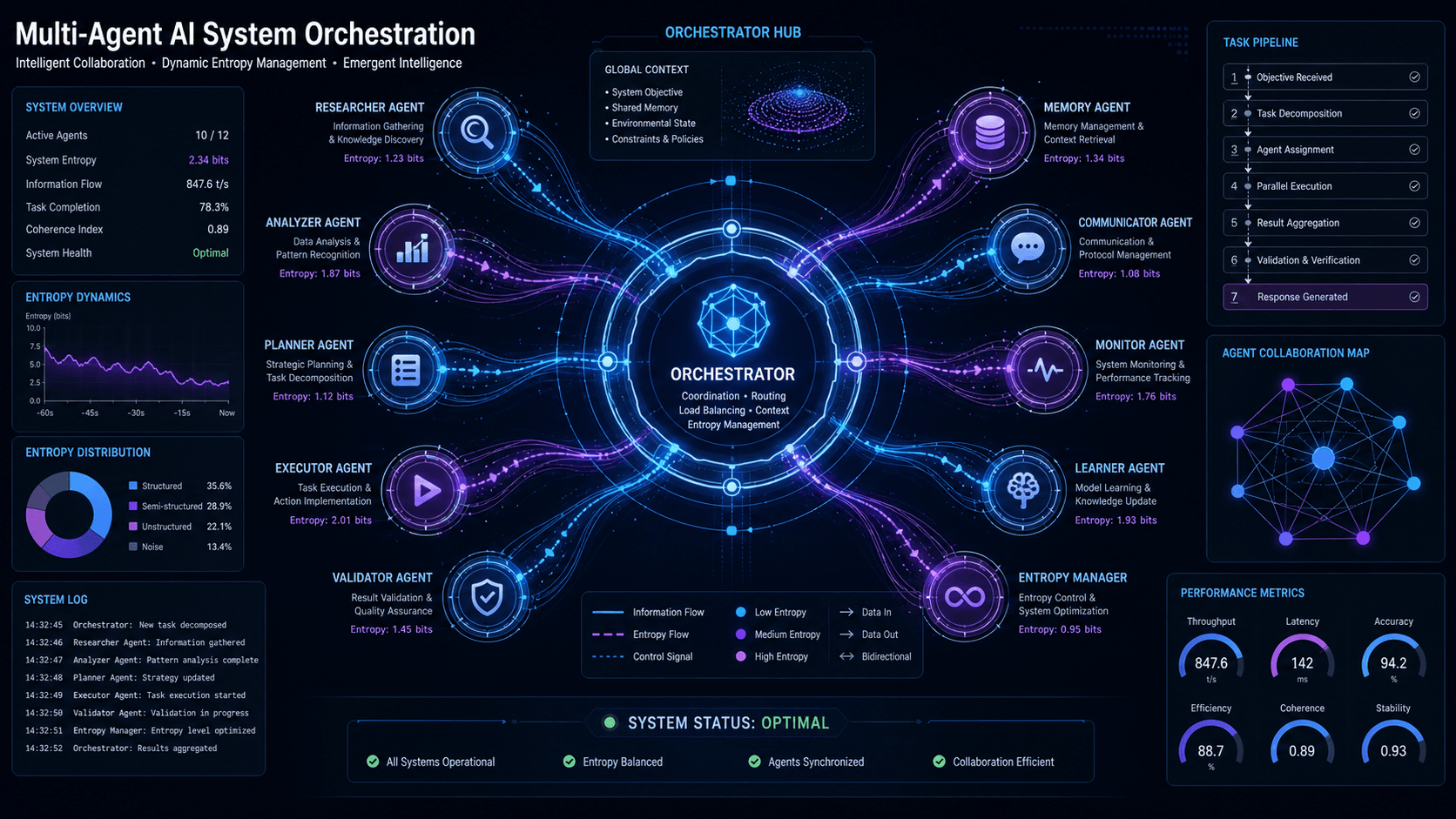
A new paper presented at ICML 2026 by researchers from Nanjing University introduces a novel method for diagnosing failures in multi-agent systems. The study posits that the root cause of these system-wide degradations lies not with the individual agents, but with the central orchestrator that manages their interactions. Utilizing entropy dynamics as a diagnostic tool, the researchers can effectively pinpoint vulnerabilities within the orchestrator's control mechanisms. This approach offers a significant departure from previous analyses that often focused on the performance of individual agents. The findings suggest that improving the robustness and reliability of the orchestrator is paramount for ensuring the stability of complex multi-agent systems. This research could have profound implications for the design and deployment of AI systems across various domains, from robotics to autonomous decision-making platforms.
This research highlights a critical systemic vulnerability in multi-agent systems, shifting focus from individual agent performance to the central orchestrator. By employing entropy dynamics, the study provides a quantifiable method to diagnose degradation, suggesting that architectural design of the control layer is a key determinant of overall system stability. As AI systems become increasingly complex and interconnected, understanding and mitigating failures at the orchestrator level will be crucial for ensuring reliable and predictable autonomous operations. Future work might explore how to build more resilient orchestrators or develop decentralized control mechanisms to reduce single points of failure, thereby enhancing the trustworthiness of these advanced AI deployments.
AI-generated to prompt reflection — not editorial opinion, not advice, not a statement of fact. How this works.