ICT Teachers Absent in Many Government Colleges, None in Secondary Schools
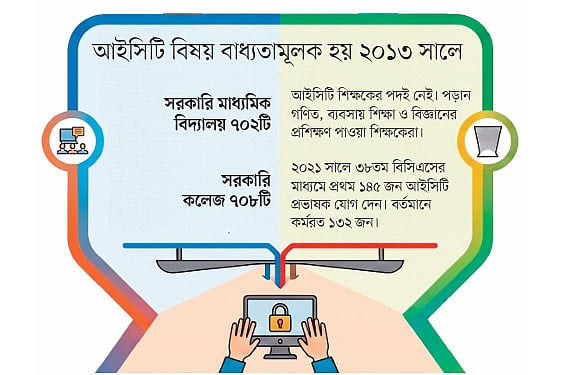
Many government colleges in Bangladesh still lack dedicated Information and Communication Technology (ICT) teachers. Furthermore, not a single government secondary school in the country has a separate teaching position for ICT. This situation highlights a significant gap in the provision of specialized ICT education across the nation's public educational institutions. The absence of qualified ICT educators raises concerns about the quality of digital literacy and technical skills being imparted to students. It is unclear how practical ICT classes are being conducted, or if they are happening at all, given the shortage of specialized staff. This deficiency in teaching resources could impede students' preparedness for an increasingly digital world and future job markets. The government faces a challenge in addressing this widespread lack of ICT instructors to ensure equitable and effective technology education.
The widespread absence of dedicated ICT teachers in government colleges and secondary schools points to a systemic challenge in educational infrastructure development. This deficiency may stem from resource allocation priorities, a lack of strategic planning for future technological needs, or difficulties in recruiting and retaining specialized educators. Without adequate ICT instruction, students may be disadvantaged in developing essential digital competencies, potentially impacting their future academic and professional opportunities. Addressing this gap requires a multi-faceted approach, including curriculum reform, teacher training initiatives, and potentially a review of the national education budget to prioritize critical subject areas like ICT. The long-term implications could affect national competitiveness in a globalized, technology-driven economy.
AI-generated to prompt reflection — not editorial opinion, not advice, not a statement of fact. How this works.