igus Unveils Twisterchain: A 600-Degree Rotating Energy Chain for Industrial Robots
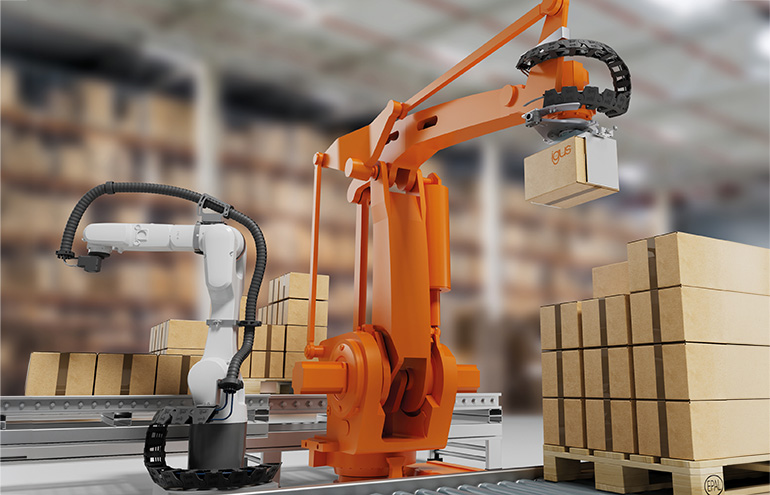
igus has introduced its new twisterchain, an energy chain designed to manage cables in demanding industrial robotics applications. This innovative solution is particularly suited for tasks like palletizing, where robots require extensive freedom of movement. The twisterchain allows for a continuous rotation of up to 600 degrees, ensuring that cables remain protected and untangled even during complex, multi-directional movements. This capability addresses a critical need in modern automation, where robots are increasingly deployed in dynamic and confined spaces. The product aims to enhance the reliability and longevity of robotic systems by preventing cable strain and damage. By providing a robust cable management system, igus supports the growing complexity and efficiency demands of industrial automation. The twisterchain represents a significant advancement in maintaining operational integrity for robotic arms in diverse manufacturing environments.
The introduction of igus's twisterchain addresses a key engineering challenge in industrial robotics: managing cable flex and strain during high-rotation movements. As automation systems become more sophisticated and robots are tasked with increasingly complex, multi-axis operations like palletizing, the durability and reliability of their power and data conduits become paramount. This innovation likely stems from market pressure to extend robot uptime and reduce maintenance costs associated with cable damage. The 600-degree rotation capability suggests a design optimized for specific, high-demand applications, potentially setting a new standard for energy chain performance in dynamic robotic environments. Future developments may focus on further increasing rotation angles, integrating smart monitoring for cable health, or adapting the technology for even more extreme industrial conditions.
AI-generated to prompt reflection — not editorial opinion, not advice, not a statement of fact. How this works.
