Illegal Fuel Station Raided in Duque de Caxias, Six Arrested, Over 12,000 Liters Seized
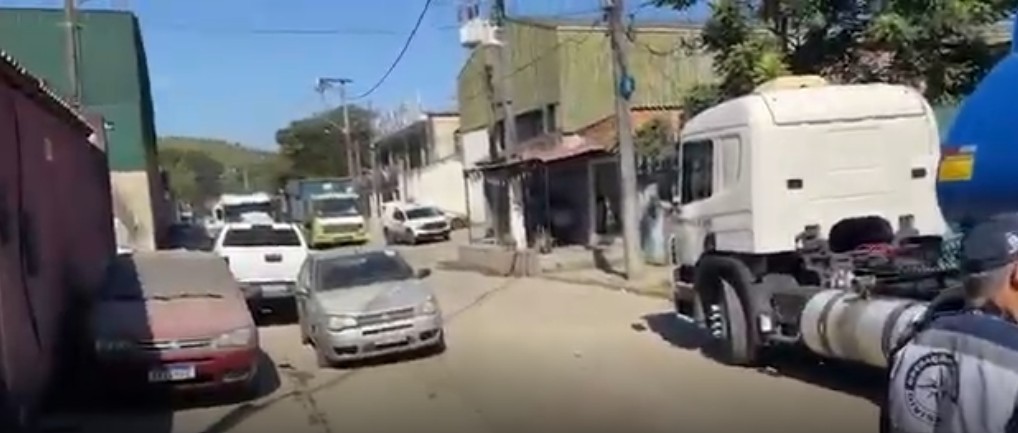
A joint operation involving the Civil Police's Operação Foco and the National Agency of Petroleum, Natural Gas and Biofuels (ANP) shut down an illegal fuel station, known locally as a 'biqueira,' in Duque de Caxias, Baixada Fluminense, on Friday, March 3rd. Six individuals were arrested in the act, and authorities seized over 12,000 liters of irregularly stored fuel, along with R$ 22,750 in cash. Investigations revealed that the operation was supplied by truck drivers who diverted fuel loads during transport, with the seized money intended to pay these drivers for their participation in the fraud. The confiscated fuel included 5,000 liters of regular gasoline, 1,000 liters of additive gasoline, 2,300 liters of ethanol, 1,000 liters of S500 diesel, and 2,900 liters of S10 diesel. The premises were embargoed by the ANP and the Directorate of Repression of Fiscal Crimes (Delfaz). Two tanker trucks linked to the scheme were also located; one was at the clandestine warehouse, and the other was intercepted as it left the site. The fraud reportedly began at distribution centers, with drivers removing approximately 20 liters from each of the eight tank compartments, selling the diverted fuel at the clandestine warehouse for R$ 70 per 20-liter portion. After diversion, the compartments were resealed with correct seals corresponding to the cargo documentation, making detection difficult. The illegally resold fuel was offered at prices below market rates. Beyond financial losses to distributors, transporters, and tax revenue, the irregular storage posed risks of accidents and the sale of uncertified fuel. The Secretary of the Institutional Security Cabinet (GSI-RJ), Roberto Lizandro Leão, stated that such clandestine operations harm public finances, promote unfair competition, and endanger public safety, emphasizing that Operação Foco will continue its efforts against fuel market crimes in the state.
This operation highlights systemic vulnerabilities in fuel distribution and regulatory oversight, allowing for significant diversion and illicit resale. The method employed, involving tampering with seals and precise diversion during transit, suggests a sophisticated criminal network exploiting gaps in real-time tracking and verification. The financial incentive structure, paying drivers per diversion, points to the economic drivers behind such illicit markets. Beyond immediate financial and safety risks, the long-term impact includes erosion of tax bases and undermining legitimate businesses. Future efforts might consider enhanced digital tracking of fuel loads, more rigorous seal integrity checks at multiple points, and incentivizing whistleblowers within the logistics chain to disrupt these operations before fuel reaches clandestine distribution points.
AI-generated to prompt reflection — not editorial opinion, not advice, not a statement of fact. How this works.