Illegal Gold Seizures Skyrocket 830%, Revealing New Smuggling Routes
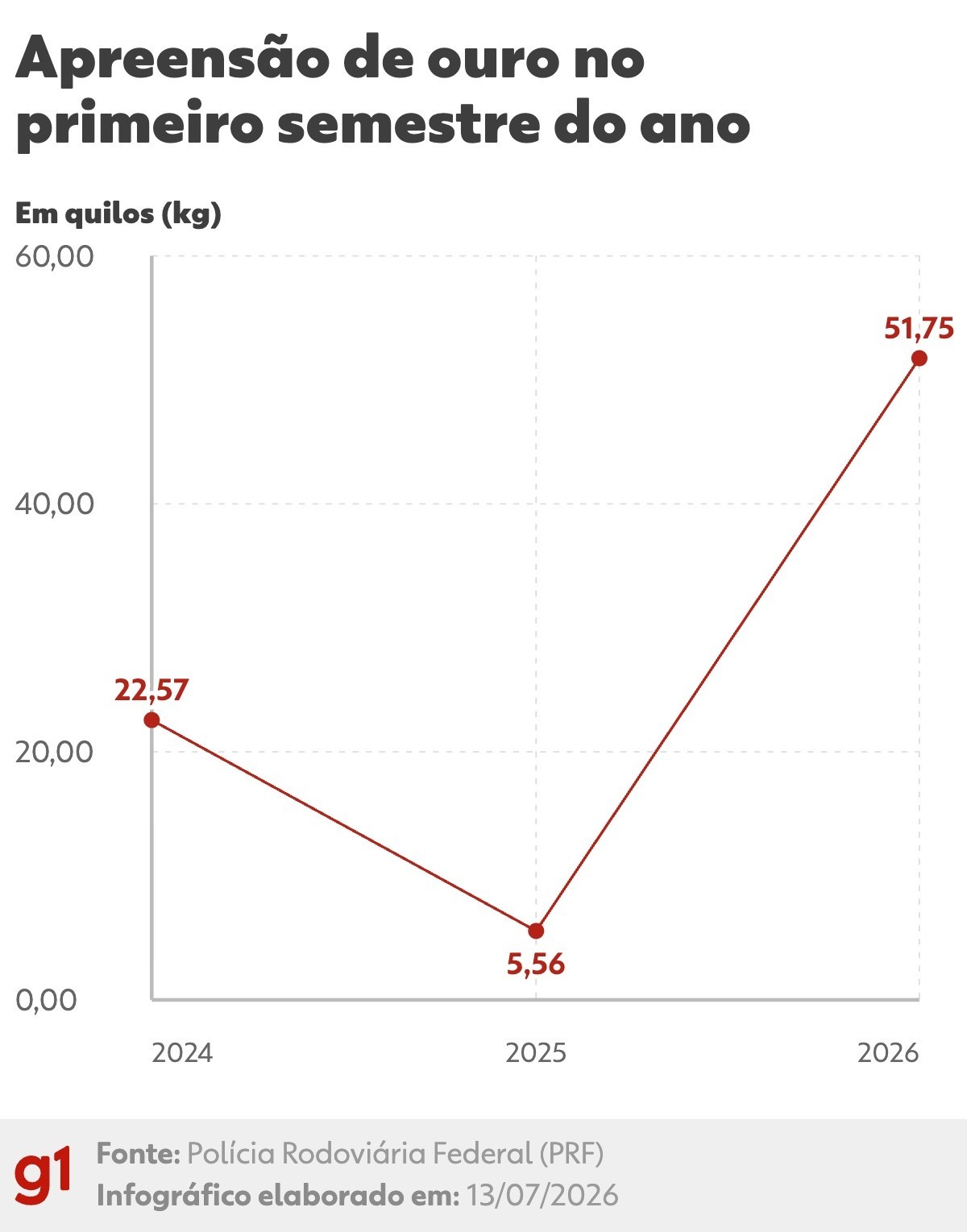
In the first half of 2024, Brazil's Federal Highway Police (PRF) seized 51.75 kg of illegal gold, an 830.76% increase compared to less than 6 kg in the same period last year. The majority of these seizures occurred in Pará (26.52 kg) and Roraima (15.64 kg). According to Larissa Rodrigues, research director at Instituto Escolhas, the Northern region, particularly near the border, has become a hub for a new illegal mining route, influenced by legislative changes and rising gold prices.
Historically, a 2013 law facilitated the "laundering" of illegal gold by assuming the "good faith" of buyers, allowing financial institutions to purchase gold without strict origin verification. However, stricter measures implemented in March 2023 by the Federal Revenue Service mandated electronic invoicing for mining operations. In April 2023, the Supreme Federal Court (STF) suspended the presumption of legality and good faith for gold buyers.
Official mining production saw an 81% decrease by 2025 compared to 2022, with Instituto Escolhas data indicating that while some legal production declined, a significant portion shifted to illegal extraction destined for international markets. Previously, illegal gold was smuggled out through major airports alongside legal gold; this route was closed in 2023, forcing illegal gold to be contraband through Venezuela via Roraima. The total gold seized in 2024 and 2025 (261.76 kg) already surpasses the 253 kg seized between 2020 and 2023. Roraima also recorded a record seizure of over one ton of mercury, a toxic substance used in gold extraction, by June 2024. Marcelo Aguiar, PRF superintendent in Roraima, noted the state's strategic role as a corridor for illegal mining wealth smuggling.
Despite a recent 26% drop from its historical peak above US$5,400 per troy ounce, gold's significant price appreciation has kept Brazilian gold a target for illegal mining. Rodrigues emphasizes the need for continued efforts to combat this crime, advocating for improved origin traceability systems and market structuring.
The dramatic surge in illegal gold seizures and the emergence of new smuggling routes highlight the persistent challenges in regulating Brazil's mining sector. Legislative changes aimed at curbing illicit activities appear to have shifted, rather than eliminated, illegal operations, redirecting them through more clandestine channels. This suggests a dynamic adaptation by organized crime to enforcement measures, underscoring the need for agile and intelligence-driven interdiction strategies. The increased seizure of mercury further points to the environmental and health risks associated with unregulated mining. Future policy interventions must consider not only domestic regulatory frameworks but also international cooperation to disrupt cross-border illicit trade and address the underlying economic incentives that drive illegal extraction, particularly in light of global market volatility and commodity price fluctuations.
AI-generated to prompt reflection — not editorial opinion, not advice, not a statement of fact. How this works.