In 1776, the Moon Was 31 Feet Closer and Served as a Natural Clock, Calendar, and Light Source
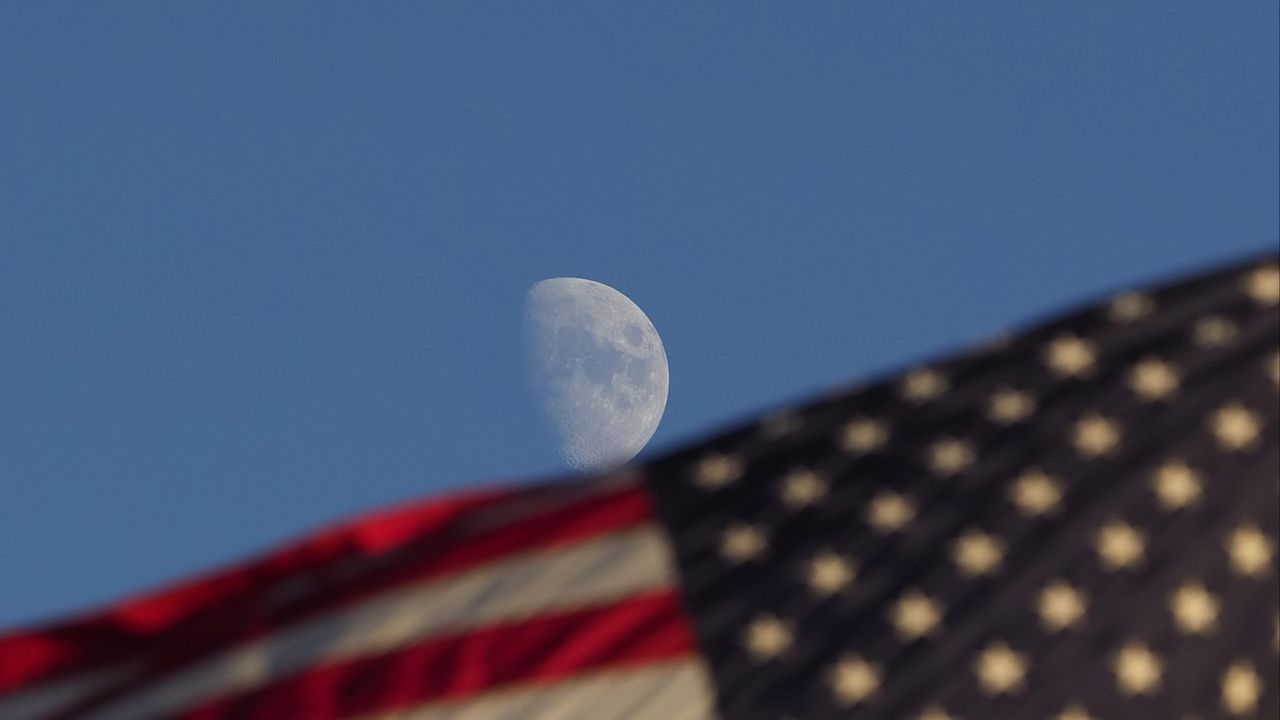
On the first Independence Day in 1776, the Moon was approximately 31 feet closer to Earth than it is currently. This proximity influenced how early Americans perceived and utilized the Moon. Colonists relied on the celestial body as a natural clock, tracking time by its phases and position in the sky. It also served as a calendar, with its cycles dictating agricultural and social activities. Furthermore, the Moon provided essential illumination, acting as a natural streetlight during nighttime hours. Astronomers of the era possessed a certain level of understanding regarding the Moon's behavior and its relationship with Earth. This historical perspective highlights the Moon's significant role in the daily lives of people in the late 18th century, long before modern technology offered alternative methods for timekeeping and lighting.
The historical account of the Moon's closer proximity in 1776 and its utilization as a clock, calendar, and light source underscores humanity's deep historical reliance on natural celestial phenomena for societal organization and daily life. This perspective invites reflection on how technological advancements, while offering precision and convenience, have also distanced modern society from direct engagement with astronomical cycles. The narrative prompts consideration of the potential systemic benefits and drawbacks of such a detachment, particularly in an era increasingly defined by artificial systems and digital interfaces. Examining this historical context can illuminate how future societies might re-evaluate their relationship with natural rhythms amidst rapid technological evolution.
AI-generated to prompt reflection — not editorial opinion, not advice, not a statement of fact. How this works.