India Before Photography: Emily Eden's 1830s Portraits
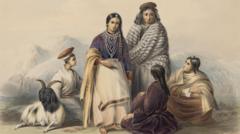
In the 1830s, Emily Eden embarked on a journey through North India, meticulously documenting the region through her art before the advent of photography. Her extensive travels allowed her to capture portraits of various individuals and communities. Eden's subjects included royalty, such as princes, as well as warriors and members of distinct hill communities. Her artistic endeavors extended beyond human subjects, as she also created likenesses of animals. These visual records offer a unique glimpse into India during a period when photographic technology was not yet widely available. Eden's work serves as a historical archive, preserving the appearance of people and the environment of North India in the mid-19th century.
Emily Eden's artistic documentation of North India in the 1830s predates widespread photographic technology, offering a valuable pre-modern visual record. This historical context highlights the crucial role of art in capturing societal and cultural nuances when technological alternatives were limited. As AI-driven image generation and analysis become more sophisticated, understanding the methods and limitations of earlier documentation forms provides a critical baseline for evaluating contemporary visual data. This perspective encourages reflection on how future historical records will be created and interpreted in an era of advanced digital imaging and artificial intelligence.
AI-generated to prompt reflection — not editorial opinion, not advice, not a statement of fact. How this works.