India Exam Leak Scandal: Student Suicides Highlight Systemic Pressures
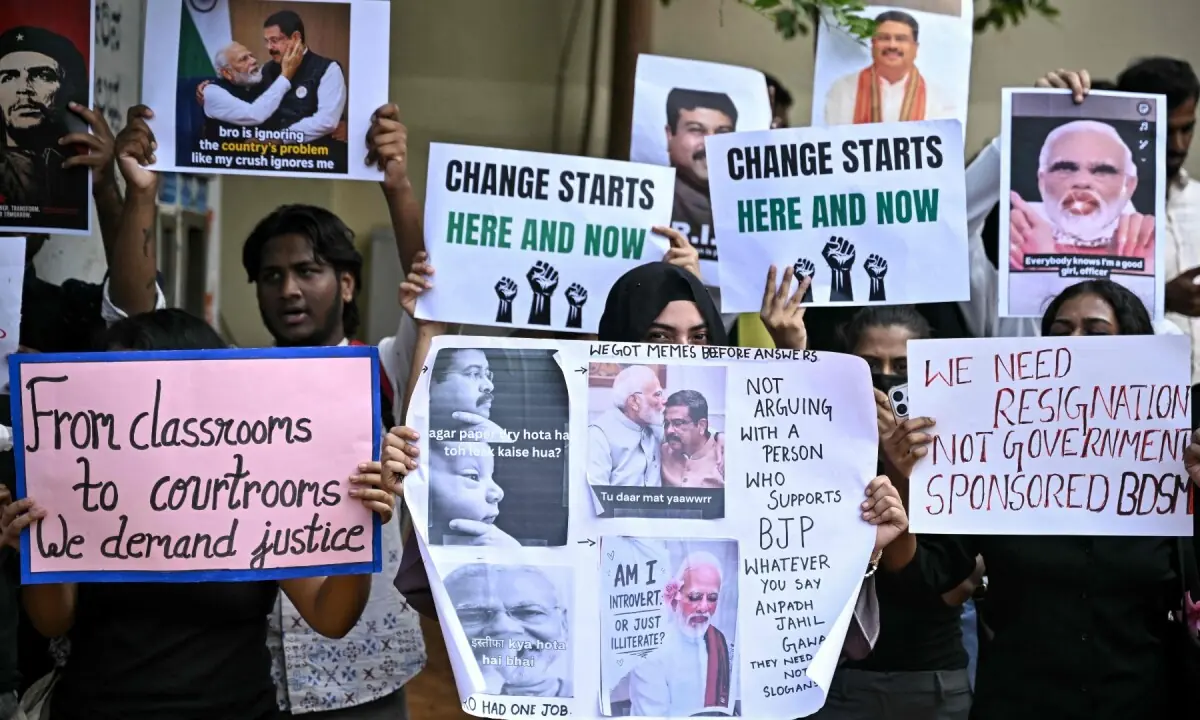
The recent leak of India's National Eligibility cum Entrance Test (NEET) question paper has led to nationwide protests and public anger, with reports indicating at least 20 students died by suicide following the announcement of a retest. Among the victims was 20-year-old Rema Begum from Assam, who, after years of study and costly coaching, felt her dreams of becoming a doctor were shattered by the scandal. Her father, Rajaul Islam, recounted her despair after the retest announcement, noting the significant financial sacrifices he made for her education. Similarly, in Rajasthan, farmer Rajesh Kumar sold ancestral land and borrowed heavily for his son Pradeep Meena's three years of coaching, only for the 22-year-old to die by suicide after the retest was ordered. Another family in Uttar Pradesh lost their 21-year-old son, Ritik Mishra, who died by suicide after his third attempt at the exam, shortly after the leak was revealed. The NEET exam, a crucial pathway to secure, well-paying medical careers, sees over two million candidates competing for approximately 137,000 seats, fueling a massive coaching industry. Scholars like G.N. Devy emphasize the immense pressure on students, stating that for many families, success in NEET signifies a comfortable future, but the scarcity of seats creates disproportionate competition. The experience of retaking the exam is described as mentally demoralizing by students like Chaitanya Aggarwal, and teachers like Abhijit Patra highlight the added stress on an already demanding process. For families who have made enormous financial and personal sacrifices, the exam irregularities are perceived as a profound betrayal, especially for those from lower-income households.
The tragic outcomes stemming from India's medical entrance exam leak underscore the intense societal pressure for upward mobility through professional careers, particularly in medicine. The system's design, characterized by a vast number of aspirants competing for limited seats, creates a high-stakes environment where any disruption, such as a paper leak, can have devastating psychological consequences. This situation reveals a potential systemic vulnerability where the integrity of the selection process is paramount, not just for fairness but for public health and safety, given the critical nature of medical professions. Future policy considerations might involve exploring mechanisms to increase the supply of medical seats, enhance the security and transparency of examination processes, and implement more robust mental health support systems for students navigating these highly competitive academic pathways. The events highlight the tension between meritocratic ideals and the practical realities of resource scarcity and governance challenges within large-scale educational systems.
AI-generated to prompt reflection — not editorial opinion, not advice, not a statement of fact. How this works.