India: Government Seeks Time on Youth Protesters' Demand for Education Minister's Resignation
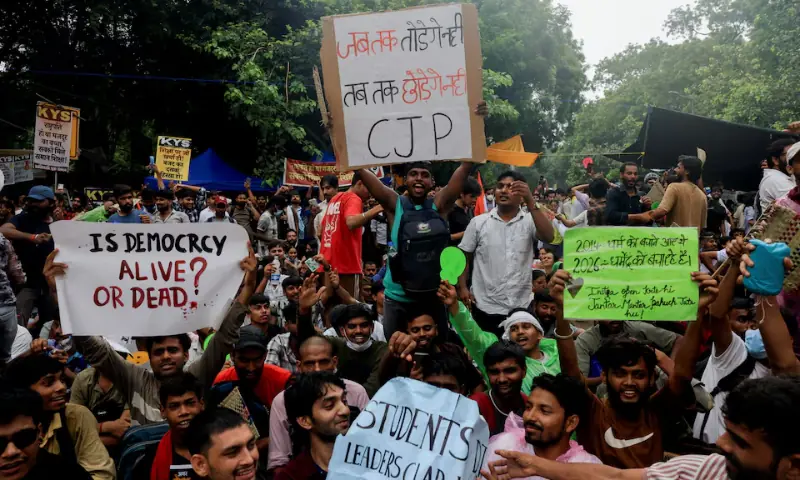
The Indian government has requested until Saturday afternoon to respond to the youth-led "Cockroach" movement's demand for the Education Minister's resignation following widespread exam paper leaks. This comes after activist Sonam Wangchuk ended a 26-day hunger strike, sparking hopes for a resolution amid significant youth protests in Delhi. The movement, calling itself the Cockroach Janta Party (CJP), has presented its demands to federal ministers JP Nadda and Jitendra Singh. The CJP insists that Education Minister Dharmendra Pradhan must resign, and has warned of escalating protests if this demand is not met. They also seek the dropping of police cases against protesters and compensation for students who reportedly died by suicide after the exam leak in May. The CJP's demands were conveyed during talks held on July 24, 2026, outside the Constitution club in New Delhi. While the government has asked for time to consider the resignation, Minister Nadda described the talks as cordial. The protests, which began online, have grown significantly, fueled by frustration over job shortages and frequent exam irregularities. The movement has gained traction, with opposition parties echoing their demands and disrupting parliamentary sessions. Nationwide demonstrations have occurred, with protests reported in West Bengal, Telangana, Karnataka, and Tamil Nadu. Security measures in Delhi have included the closure of metro stations and internet shutdowns. The government has also asserted a right to surveillance in public spaces for legitimate state interests. Analysts suggest that the growing anti-government sentiment could impact upcoming state elections.
The "Cockroach" movement's protests highlight systemic issues within India's education and employment sectors, amplified by digital communication channels. The government's response, characterized by seeking time and engaging in dialogue, suggests an awareness of the movement's growing influence and potential to disrupt political stability, especially with state elections on the horizon. The CJP's demands, including compensation for affected students and dropping of charges, point to a broader societal reckoning with accountability and support systems for youth facing academic and economic pressures. The government's stance on public space surveillance, however, indicates a tension between managing dissent and upholding civil liberties, a dynamic likely to persist as digital activism continues to evolve. The movement's origins as online satire evolving into street protests mirrors global trends where social media can rapidly mobilize public opinion, posing unique governance challenges for established political structures in the coming decade.
AI-generated to prompt reflection — not editorial opinion, not advice, not a statement of fact. How this works.