India Launches First Indigenous Hydrogen Train on Jind-Sonipat Route
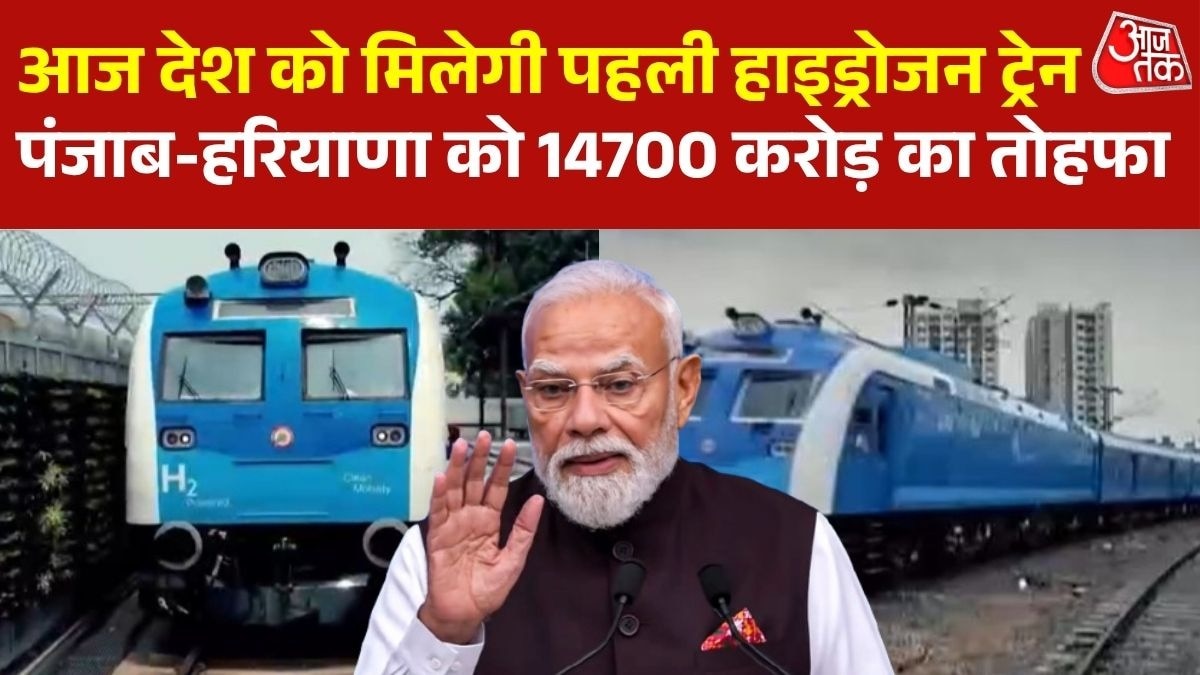
Prime Minister Narendra Modi is set to inaugurate India's first indigenous hydrogen fuel cell train today, marking a significant step in sustainable transportation. The train will operate on the Jind-Sonipat route in Haryana. This initiative is part of a larger package where the Prime Minister will dedicate projects worth ₹14,700 crore to Punjab and Haryana. The hydrogen train utilizes a chemical reaction between hydrogen and oxygen to generate its own electricity, emitting only water vapor. This 10-coach train has a capacity of approximately 2,600 passengers. It is equipped with an advanced safety system capable of detecting hydrogen leakage, fire, smoke, and heat promptly. The launch signifies India's commitment to exploring cleaner energy alternatives in its railway network.
The introduction of India's first hydrogen fuel cell train on the Jind-Sonipat route represents a strategic move towards decarbonizing the railway sector, aligning with global trends in sustainable energy. This technological advancement, while promising reduced emissions, will require substantial infrastructure investment and robust safety protocols to manage hydrogen as a fuel. The long-term viability will depend on the cost-effectiveness of hydrogen production, distribution, and maintenance compared to existing diesel or electric alternatives. Evaluating the scalability and economic feasibility of this technology across the vast Indian railway network will be crucial in the coming decade, particularly as India aims to meet its climate targets and enhance energy independence.
AI-generated to prompt reflection — not editorial opinion, not advice, not a statement of fact. How this works.