India Parliament Stalled Amid Student Protests Over Exam Leaks, Minister's Resignation Demand
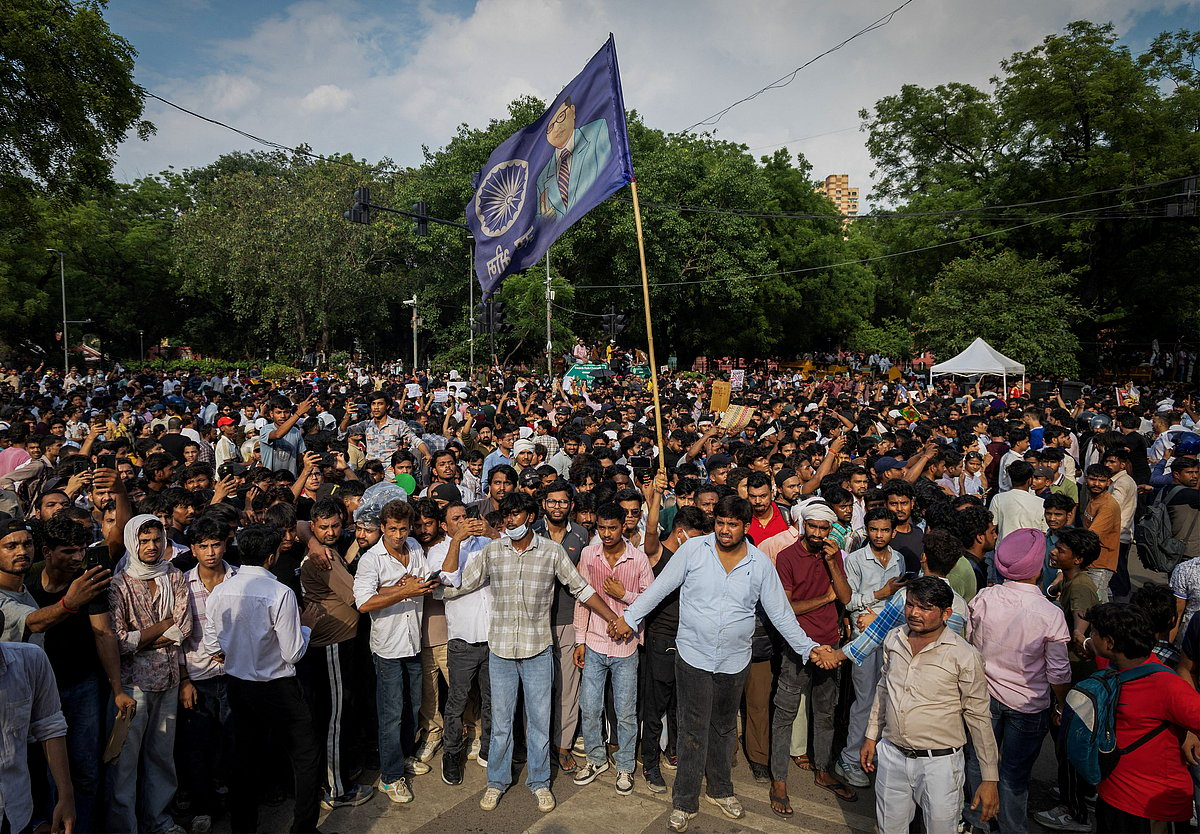
India's Parliament has been paralyzed for three consecutive days as student-led protests intensify over alleged exam paper leaks and police brutality. Students are demanding the resignation of Education Minister Dharmendra Pradhan and an apology from the Prime Minister, alongside punishment for those responsible for alleged mistreatment. The protests, initially centered at Jantar Mantar in Delhi, have garnered significant public support, with citizens donating food and water to the demonstrators. This spontaneous public backing is reportedly unprecedented in Delhi. Opposition leaders, including Rahul Gandhi of the Congress party, have voiced strong support for the students' demands, criticizing the government's handling of the situation and the alleged corruption and incompetence of the Education Minister. Parliament sessions have been repeatedly adjourned due to opposition demands for a debate on the exam leak issue and the minister's resignation. The government has offered to discuss the exam leaks but refuses to concede to the minister's removal, viewing it as a politically motivated demand. Meanwhile, BJP leaders have suggested foreign interference, including from Pakistan and George Soros, in destabilizing the government. The Delhi High Court has also intervened, ordering the preservation of all evidence related to police actions amid allegations of brutality against students. The protests have spread beyond Delhi, with solidarity demonstrations occurring in cities like Ahmedabad and Bengaluru. Student leaders have requested activist Sonam Wangchuk to end his hunger strike, assuring him the movement will continue until demands are met.
The escalating protests in India highlight a critical juncture in public trust regarding educational integrity and governance. The widespread public support, evidenced by spontaneous donations and solidarity actions, suggests a deep-seated public concern that transcends partisan politics. The government's stance, refusing to address the demand for the Education Minister's resignation while offering dialogue on other issues, presents a governance challenge. This approach risks alienating a vocal segment of the population and could fuel further distrust, particularly if the allegations of police misconduct are substantiated. The framing of external conspiracy by some government figures may serve to deflect from domestic accountability mechanisms. Moving forward, a transparent and responsive approach to addressing the root causes of public discontent, including exam integrity and the conduct of law enforcement, will be crucial for restoring confidence and ensuring the stability of public institutions in the long term.
AI-generated to prompt reflection — not editorial opinion, not advice, not a statement of fact. How this works.