India: Police Clash with 'Cockroach' Protestors in New Delhi
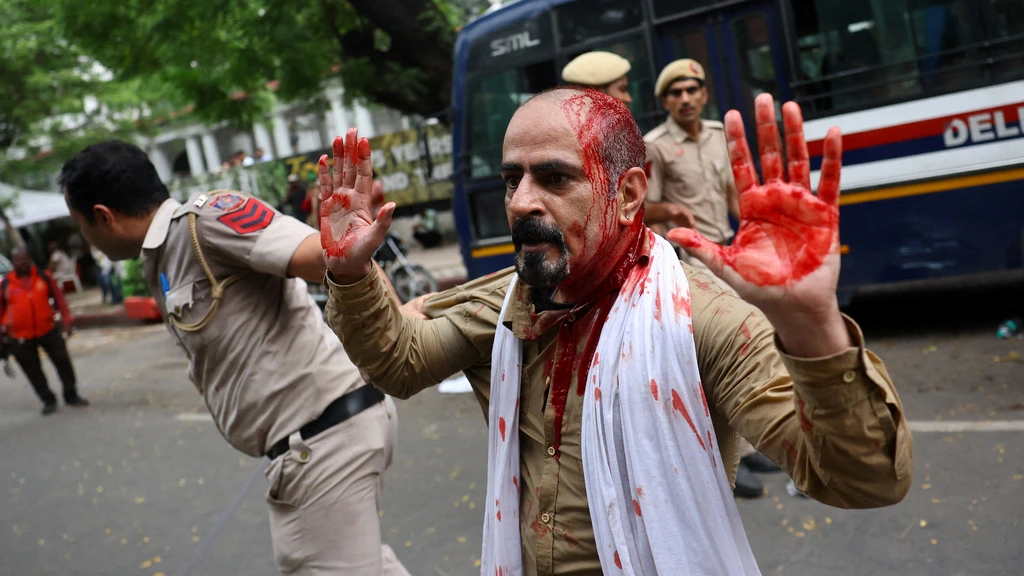
Thousands of demonstrators in New Delhi clashed with Indian police today during a protest organized by the "Cockroach" movement. Supporters marched towards the parliament, demanding the resignation of the Minister of Education. This confrontation marks the largest demonstration by the movement against the government to date. The founder of the movement, Abhijeet Dipke, has been arrested.
The "Cockroach" movement is protesting corruption in India and capitalizing on youth dissatisfaction with the lack of jobs and educational opportunities. The movement emerged following a major fraud case related to medical school entrance exams. Protesters called for the responsible minister to step down, but their demands have not been met. One demonstrator told the Associated Press that they are participating because "this rotten system refuses to act" and "they don't see the pain of the students."
Initially a satirical online initiative, the movement's name originated when a judge compared unemployed youth to pests. Young people embraced the moniker, adopting "cockroaches" as their identity. Operating as the "Cockroach Janta Party," they parody Prime Minister Modi's Bharatiya Janata Party. Their Instagram account rapidly gained 23 million followers.
According to BBC reports, police used tear gas and batons to disperse the crowd, stating the protest lacked official permission. The organization also reported internet disruptions in parts of the city. The movement, which held its first major protest last month to demonstrate its organizational strength, has continued its demonstrations as the minister remains in office. For the past month, protesters have been camping at the Jantar Mantar observatory, with one activist undertaking a hunger strike before being hospitalized. Dipke also joined the hunger strike, which reportedly attracted more young participants.
The "Cockroach" movement's protest highlights significant youth disillusionment in India, stemming from perceived corruption and a lack of economic opportunity, particularly in education and employment. The movement's satirical origins and rapid digital growth underscore the evolving nature of political engagement among young demographics. The government's response, involving police force and internet restrictions, suggests a strategy focused on immediate suppression rather than addressing the underlying systemic grievances. Future governmental approaches may need to consider more direct dialogue and policy reforms to mitigate such widespread public discontent and harness the energy of a digitally connected youth population, rather than risking further alienation and the potential for more disruptive forms of protest.
AI-generated to prompt reflection — not editorial opinion, not advice, not a statement of fact. How this works.